How to Choose the Right Inductance Sensor for Your Project?
Choosing the right inductance sensor can significantly impact your project's success. In 2021, the global inductive sensor market size was valued at $1.3 billion, showing a promising growth trend. This growth highlights the need for precision in sensor selection.
Inductance sensors play a vital role in various applications, including industrial automation and automotive sectors. These sensors detect changes in inductance, giving real-time feedback. However, understanding the specific requirements of your project is crucial. Different applications demand varying specifications, such as sensitivity, range, and size.
Reflecting on recent industry data from market reports can inform your decision-making process. A misstep in selecting an inductance sensor could lead to inefficiencies. Thus, we must consider all influencing factors carefully. Technology evolves rapidly, and staying updated is essential for any project’s long-term success.

Understanding Inductance Sensors: Basics and Applications
Inductance sensors play a crucial role in various applications, from automation to automotive systems. They measure the change in inductance caused by the proximity of conductive materials. This principle allows for precise detection and measurement in complex systems. According to a recent industry report, the inductive sensor market is projected to grow at a CAGR of 6.8% from 2023 to 2030. This growth reflects the increasing reliance on automation and smart technologies.
When selecting an inductance sensor, it's essential to understand their basic working principles. These sensors operate by generating an electromagnetic field around a coil. When a conductive object enters this field, it alters the inductance, which can be measured. However, some may overlook potential limitations. For instance, environmental factors such as temperature and humidity can affect sensor accuracy. Research shows that nearly 30% of projects reported issues due to environmental interference.
Applications of inductance sensors are diverse. They are used in metal detection, presence sensing, and position control. Their versatility is beneficial, but projects can run into unexpected challenges. For example, sensor placement is crucial. If a sensor is too far from the target, the readings may be unreliable. Understanding these nuances is key to leveraging inductance sensors effectively.
Key Factors to Consider When Selecting Inductance Sensors
When selecting an inductance sensor for your project, consider several key factors. First, the sensing range is crucial. Sensors can detect different distances. Understanding the specific requirement helps refine your options. If the distance is too short, you may miss important data. If it’s too long, you might incur needless costs.
Next, the frequency response of the sensor matters greatly. Sensors function better at certain frequencies. A mismatch can lead to ineffective measurements. Ensure the sensor's frequency aligns with your project needs. Remember that high frequency may yield better resolution, but often comes with complexity.
Lastly, consider environmental factors. Temperature and humidity can affect sensor performance. A sensor might not perform optimally in extreme conditions. Testing in real-world scenarios often reveals weaknesses. You might find that a sensor works great on paper but fails in application. Always be ready to reassess and adapt your choice as new information becomes available.
How to Choose the Right Inductance Sensor for Your Project? - Key Factors to Consider When Selecting Inductance Sensors
| Dimension |
Description |
Considerations |
| Sensitivity |
The ability of the sensor to detect changes in inductance. |
Ensure the sensor's sensitivity matches the application's requirements. |
| Frequency Range |
The operating frequency range for the sensor. |
Select a sensor compatible with the intended application frequency. |
| Temperature Range |
The temperature range in which the sensor can operate effectively. |
Check that the sensor can handle the temperature conditions of the project. |
| Size and Form Factor |
The physical dimensions of the sensor. |
Ensure the sensor fits within the project's spatial constraints. |
| Power Supply Requirements |
The voltage and current needed for sensor operation. |
Verify that power supply is available for the selected sensor. |
| Installation and Mounting Options |
Methods for installing the sensor in the desired location. |
Consider ease of installation in relation to the application environment. |
Types of Inductance Sensors and Their Suitable Uses
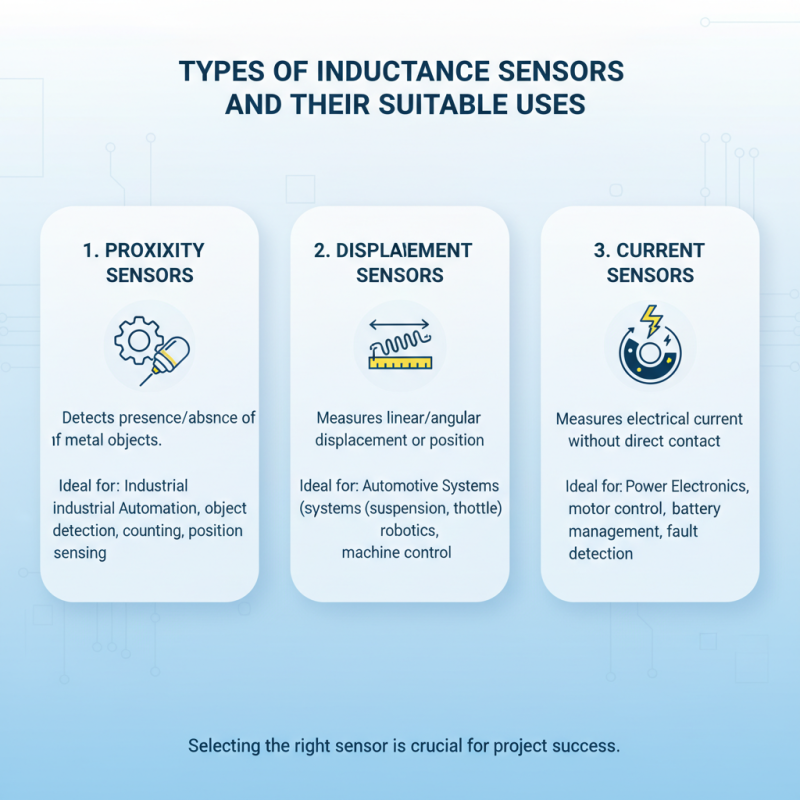
Inductance sensors are vital for various applications, ranging from industrial automation to automotive systems. Understanding the types of inductance sensors is essential for selecting the right one for your project. There are several key types: proximity sensors, displacement sensors, and current sensors. Each serves unique purposes that match specific project needs.
Proximity sensors detect objects without direct contact. They work by measuring changes in inductance caused by nearby metallic objects. According to recent industry reports, these sensors are widely used in manufacturing and robotics, where precise measurements are crucial. Displacement sensors, on the other hand, measure the distance between the sensor and an object. They are often used in precision machining and engineering applications.
Tip: Consider the operating environment. Factors like temperature and humidity can affect performance. Current sensors monitor electrical flow by evaluating changes in inductance. These sensors are essential in power management systems. They provide real-time data to enhance efficiency.
Choosing the appropriate sensor can be challenging. Reflection on application requirements is necessary. For example, think about the required sensitivity and response time. This reflection will lead to better choices and optimized performance. The right inductance sensor can dramatically influence the success of your project. Be mindful of these aspects as you navigate your selection process.
Compatibility with Project Specifications and Requirements
Choosing the right inductance sensor is crucial for any project. Compatibility with your project specifications is a key consideration. For instance, if you're working on an automotive application, the sensor must withstand vibrations and temperature fluctuations. According to industry reports, sensors operating in the range of 50 to 150 kHz often perform well in such settings. Avoid sensors that cannot meet these frequency requirements.
Power consumption is another important aspect. Many sensors consume varying amounts of power. Look for sensors that are energy-efficient if your project relies on battery power. Reports indicate that sensors with low power consumption can extend battery life significantly. However, balancing performance and power efficiency can be challenging.
Environmental factors should also be assessed. Sensors exposed to moisture or dust need to have proper housing. Not all inductance sensors are rated for harsh conditions. Selecting one without appropriate environmental ratings can lead to failures. These oversights can result in increased costs and delays. Even minor compatibility issues can create operational hiccups. Always verify that the sensor aligns perfectly with your project’s needs.
How to Choose the Right Inductance Sensor for Your Project?
Testing and Calibration of Inductance Sensors for Optimal Performance
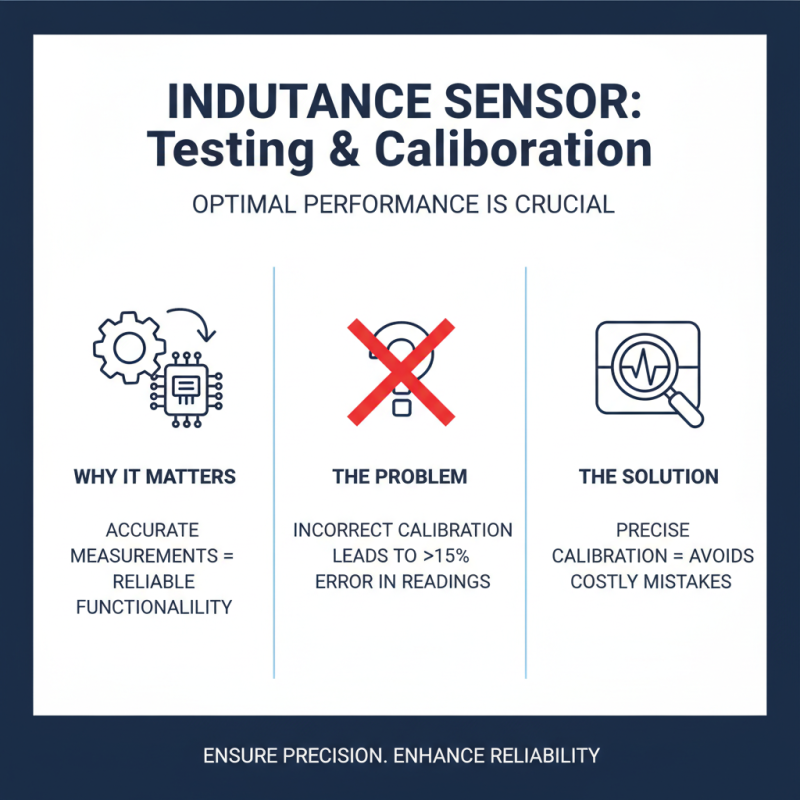
Testing and calibration of inductance sensors are crucial for achieving optimal performance. Accurate measurements can significantly impact the functionality of your project. According to industry reports, incorrect calibration can lead to errors exceeding 15% in readings. Therefore, ensuring precise calibration is necessary to avoid costly mistakes.
When calibrating inductance sensors, it’s vital to consider environmental factors. Temperature fluctuations, humidity, and electromagnetic interference can alter sensor performance. Testing should occur under controlled conditions. Regular checks can reveal unexpected sensor behavior. For instance, a study showed that sensors left unchecked for extended periods exhibited up to a 20% decrease in accuracy.
Proper testing also involves verifying the sensor's response to different frequencies. In a recent evaluation, sensors demonstrated varied responses, with some failing at higher frequencies. Employing a systematic approach can highlight these issues early. It’s essential to document all findings meticulously. This practice aids in recognizing patterns and factors affecting accuracy. Reflection on these results often leads to better sensor selection for future projects.