Why Are Instrument Transformers Essential for Electrical Measurement?
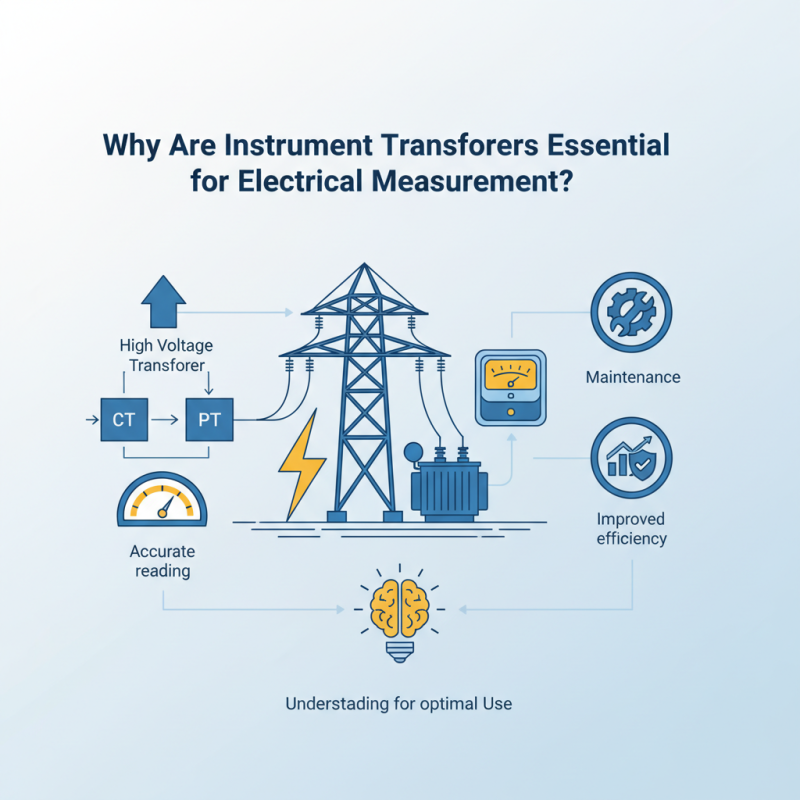
Instrument Transformers play a crucial role in electrical measurement. They ensure accurate readings of high voltages and currents. By stepping down these levels, they provide safe, manageable measurements for analysis.
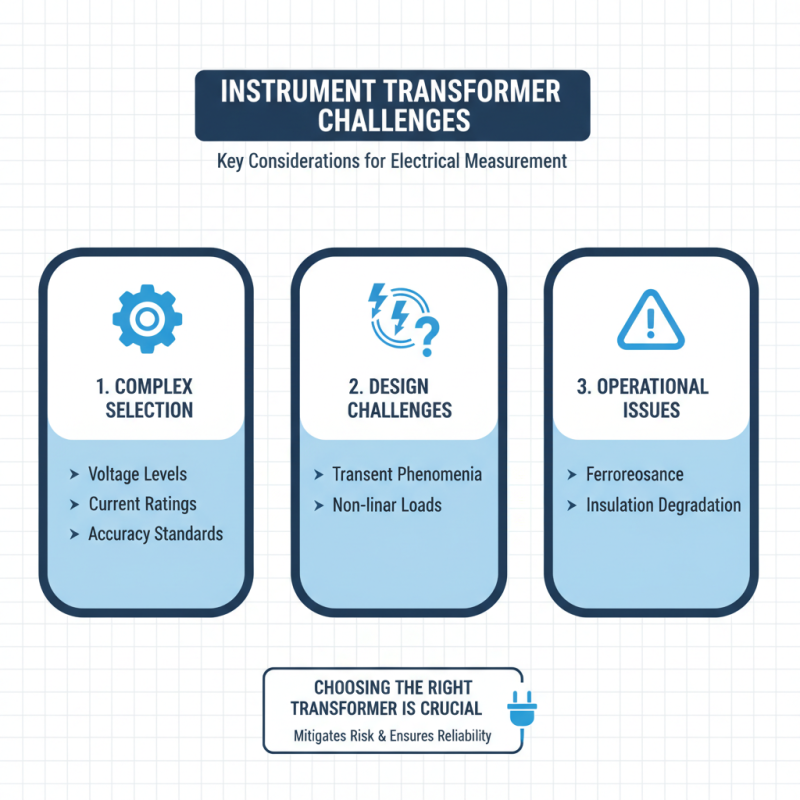
Without Instrument Transformers, measuring electrical systems would be nearly impossible. They enable instruments to function properly. However, their accuracy can sometimes be questioned due to installation errors. Improper use can lead to misleading data.
In industries, these devices are vital for monitoring. They help in maintaining safety standards and improving efficiency. Yet, organizations may overlook maintenance needs. Regular checks are essential for reliable performance. Instrument Transformers need to be understood better for optimal use.
The Role of Instrument Transformers in Electrical Measurement
Instrument transformers play a pivotal role in electrical measurement. They ensure accurate readings in high-voltage environments. This accuracy is crucial for effective monitoring and control. According to industry reports, around 70% of electrical measurement errors stem from inadequate transformer performance. Instrument transformers mitigate these risks, allowing for reliable data collection.
These devices function by scaling down high voltages or currents to manageable levels. For example, a current transformer can reduce thousands of amperes to mere milliamperes. This transformation not only protects measurement equipment but also safeguards personnel. In some cases, without proper transformers, severe accidents could occur. The need for precision is critical; even a 1% error can lead to significant miscalculations in large-scale power systems.
Despite their importance, some installations still use outdated or poorly maintained transformers. Regular testing and replacement schedules are often overlooked. Reports indicate that up to 20% of transformers in the field may not function optimally. This reality calls for ongoing evaluations. The challenge lies in balancing costs with reliable operations. Investing in high-quality instruments and periodic checks is essential for overall system integrity.
Importance of Instrument Transformers in Electrical Measurement
Instrument transformers play a crucial role in electrical measurement. They are essential for accurate voltage and current transformation, ensuring that measurements taken are safe and reliable. This chart illustrates key performance metrics of instrument transformers, highlighting their significance in electrical systems.
Types of Instrument Transformers and Their Functions
Instrument transformers play a crucial role in electrical measurement. They allow for safe and accurate measurement of high voltage and current levels. Two main types of instrument transformers are
current transformers (CTs) and
voltage transformers (VTs), each serving a distinct function.
Current transformers are essential for measuring high currents. They reduce the current to a manageable level, making it safe for meters and relays. Typically, CTs provide a secondary current that is proportional to the primary current. This proportionality makes monitoring and protection more reliable. However, wrong connections or inadequate ratings can lead to measurement errors.
Voltage transformers, on the other hand, step down high voltage. They transform high voltages into lower values suitable for standard measurement devices. VTs ensure safety and accuracy in monitoring voltage levels. They help protect both the equipment and the personnel. Despite their importance, improper installation can cause calibration issues and inaccuracies. Hence, they require careful handling and regular maintenance for optimal performance.
Key Applications of Instrument Transformers in Various Industries
Instrument transformers play a crucial role in various industries by ensuring accurate electrical measurement. These devices enable safe voltage and current transformation. In power generation, they monitor system performance. In fact, the global market for instrument transformers is projected to reach $9.83 billion by 2027, according to industry research.
In renewable energy sectors, these transformers optimize the efficiency of solar and wind power. They provide real-time data crucial for grid management. For transportation, instrument transformers help in monitoring electrical systems in railway and aviation sectors. This boosts safety and reliability. The need for robust electrical infrastructure drives this demand.
Tips: Consider ways to improve accuracy. Regular maintenance can prevent costly errors in readings. Understand the limitations of these devices. Occasionally, they may not accurately reflect transient conditions. In complex systems, redundancy in measurement may enhance reliability. This brings some peace of mind in critical applications.
Benefits of Using Instrument Transformers for Accurate Measurements
Instrument transformers play a crucial role in enhancing the accuracy of electrical measurements. They reduce high voltages and currents to manageable levels. This transformation makes it safer and easier to monitor and analyze electrical systems. Without them, direct measurements in high-voltage environments could be hazardous.
The benefits are clear. Instrument transformers provide reliable data for both protection and control. Accuracy in measurements can prevent system failures. This reliability fosters confidence in electrical monitoring. However, a common mistake is neglecting regular maintenance. If not checked, transformers might give faulty readings. It's essential to maintain them properly to ensure consistent performance.
Using instrument transformers also helps in reducing costs. They allow for the use of standard measuring devices, which are less expensive. However, the complexity of installation could lead to issues. Proper training is vital for personnel working with these systems. Understanding their functioning is necessary to avoid mishaps.