Power Silicon remains a practical foundation for global power conversion, even as newer materials attract attention. It appears in electric-vehicle inverters, solar chargers, industrial drives, data-center supplies, and household appliances. Buyers do not select devices by material name alone. They examine voltage ratings, current capacity, switching speed, thermal resistance, package design, and expected service life.
Dr. B. Jayant Baliga, a pioneer of modern power semiconductor technology, has described power electronics as “the technology of controlling and converting electrical energy.” That idea explains why Power Silicon still matters. A silicon diode may protect a compact charger, while an IGBT module can control hundreds of amperes in a factory motor drive. Power MOSFETs often serve low-voltage, high-frequency applications. Thyristors remain useful where rugged switching and high power are more important than speed.
This guide compares ten major types used by international buyers. It considers electrical performance, manufacturing maturity, supply stability, cooling requirements, and application fit. These details matter on a real procurement floor. A buyer may inspect a module’s baseplate, compare datasheets, and question whether a quoted lifetime matches field conditions. No ranking is perfect. A device that performs well in a solar inverter may be unsuitable for a harsh railway environment. Cost can also mislead. The cheapest component may demand larger heatsinks, more maintenance, or stricter operating limits. Careful selection is still essential.
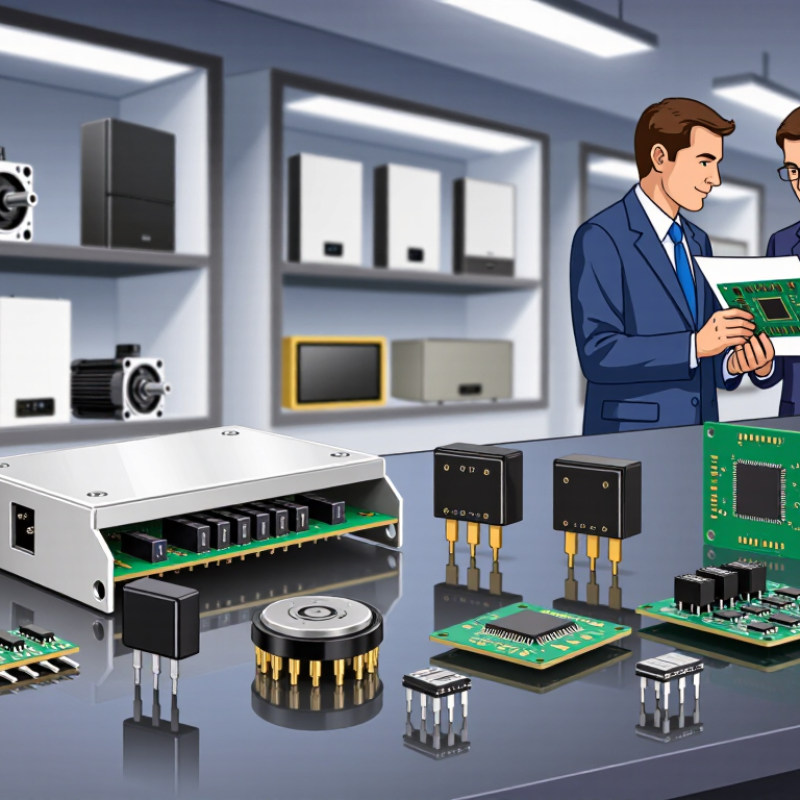
Power silicon refers to silicon-based semiconductor devices that control, convert, or protect electrical energy. They operate inside adapters, motor drives, solar inverters, industrial controls, and charging equipment. The ten widely purchased types include standard PN diodes, fast-recovery diodes, silicon Schottky diodes, bridge rectifiers, power MOSFETs, IGBTs, thyristors, TRIACs, TVS protection diodes, and power integrated circuits. Each type manages a different electrical task. Some switch current quickly, while others withstand voltage surges or regulate power efficiently.
Global buyers usually compare voltage ratings, current capacity, switching speed, thermal resistance, package size, and expected service life. A device used in a compact adapter may require low losses and small packaging. A factory motor drive may need stronger overload tolerance and dependable heat dissipation. Manufacturing traceability, testing records, and regional compliance documents also influence purchasing decisions. These details often matter more than a low unit price.
The market spans consumer electronics, renewable energy, transportation, telecommunications, and heavy industry. Demand varies by regional grid standards, energy policies, infrastructure investment, and local production capacity. Market forecasts can differ because analysts define “power silicon” in different ways. This classification is not perfect. A catalog number alone can mislead buyers, especially when cooling conditions and switching frequency are ignored. Practical evaluation should combine datasheet evidence, sample testing, application experience, and supplier reliability.

What Are the Top 10 Types of Power Silicon for Global Buyers?
Core Categories of Power Silicon Devices
Power silicon devices support switching, rectification, protection, and controlled current flow. The ten core categories include standard rectifier diodes, fast-recovery diodes, silicon Schottky diodes, avalanche diodes, TVS protection diodes, power MOSFETs, IGBTs, power BJTs, SCRs, and TRIACs. Each type fits a different electrical task. Rectifier diodes suit AC-to-DC conversion, while fast-recovery models reduce switching losses. Schottky devices offer low forward voltage at lower ratings. Avalanche and TVS diodes help manage voltage spikes. MOSFETs work well in high-frequency converters. IGBTs handle higher voltage and current efficiently. SCRs and TRIACs support controlled power regulation.
Real selection requires more than checking voltage and current labels. Buyers should review repetitive peak voltage, surge current, leakage, thermal resistance, switching frequency, and package design. A diode rated for 1,000 volts may still fail during repeated motor starts. I have seen specifications look sufficient until heat buildup changed the result. That detail is easy to underestimate. Datasheet test conditions also vary, so direct comparisons can become misleading.
Tips: Match the device to the load profile, not only the nominal rating. Check cooling conditions, pulse duration, and required safety margin. Request traceable test data and production samples before large orders. Some buyers choose the cheapest package first. That can be an expensive lesson. Inspect labeling, lot consistency, and end-of-life support carefully. Practical testing remains essential.
The top 10 power silicon types for global buyers differ by voltage, switching speed, heat, and cost. Standard PN rectifiers suit rugged, low-frequency power conversion. Fast-recovery diodes reduce switching losses in industrial inverters. Silicon Schottky diodes offer low forward voltage, especially in low-voltage supplies. Check reverse leakage carefully.
Planar MOSFETs remain practical for stable, moderate-frequency designs. Trench MOSFETs provide lower resistance and higher current density. Superjunction MOSFETs handle high-voltage switching with improved efficiency. IGBTs balance conduction loss and switching performance in motor drives and renewable-energy converters. In field testing, thermal layout often matters more than a small datasheet advantage.
Thyristors deliver dependable control in soft starters, rectifiers, and high-power systems. Gate-turn-off thyristors support controllable switching, but their drive circuits are demanding. Power bipolar transistors can serve linear or switching applications, although newer devices often reduce their use. Buyers should verify voltage margin, pulse current, junction temperature, package strength, and factory traceability. A careful sample test is essential. Specifications can look perfect on paper, yet cooling, solder quality, and real load cycles may expose weaknesses.
| Rank | Power Silicon Type | Typical Electrical Range* | Main Strengths | Common Applications | Key Buyer Considerations |
|---|---|---|---|---|---|
| 1 | Silicon Power MOSFET | Approx. 20–1,000 V; from several amperes to hundreds of amperes | Fast switching, high input impedance, simple gate drive, low conduction loss at low and medium voltages | DC-DC converters, motor drives, battery systems, telecom power supplies, low-voltage inverters | Check on-resistance, gate charge, switching loss, avalanche rating, package thermal performance, and body-diode behavior |
| 2 | Silicon IGBT | Approx. 300–6,500 V; commonly 10–1,000 A in module or discrete formats | Low conduction loss at high voltage and current, insulated gate control, strong overload capability | Industrial motor drives, welding equipment, renewable-energy inverters, traction, UPS systems | Compare voltage margin, collector-emitter saturation voltage, switching frequency, short-circuit withstand time, and module cooling requirements |
| 3 | Silicon Rectifier Diode | Approx. 50–6,500 V; from 1 A to several thousand amperes | Simple construction, high surge capability, low cost, reliable one-way current conduction | AC-DC rectifiers, battery chargers, welding systems, industrial power supplies, uncontrolled bridges | Evaluate repetitive peak reverse voltage, average forward current, surge-current rating, reverse-recovery time, and heatsink needs |
| 4 | Silicon Schottky Diode | Typically up to about 200 V; from less than 1 A to hundreds of amperes | Very low forward voltage and negligible minority-carrier reverse recovery | Low-voltage rectification, high-frequency converters, OR-ing circuits, freewheeling paths | Balance leakage current against forward loss; verify reverse-voltage margin, junction temperature, and thermal resistance |
| 5 | Silicon Fast-Recovery Diode | Approx. 200–6,000 V; from a few amperes to several hundred amperes | Reduced reverse-recovery time compared with standard rectifiers, suitable for higher-frequency switching | IGBT antiparallel paths, high-frequency rectifiers, resonant converters, welding and induction equipment | Review reverse-recovery charge, softness factor, peak recovery current, EMI impact, and thermal cycling capability |
| 6 | Silicon Thyristor (SCR) | Approx. 200–8,000 V; from tens of amperes to several thousand amperes | High surge-current capability, low on-state loss, and latching operation with simple control | Soft starters, controlled rectifiers, battery chargers, heating controls, HVDC and industrial drives | Confirm gate trigger requirements, latching and holding current, commutation conditions, di/dt, dv/dt, and surge rating |
| 7 | Silicon TRIAC | Typically 200–1,200 V; commonly 4–100 A RMS | Bidirectional AC switching in one component, compact gate-controlled design | AC motor speed controls, lighting dimmers, heating controllers, appliance power regulation | Check commutation performance with inductive loads, gate sensitivity, RMS current, surge current, and heat dissipation |
| 8 | Silicon TVS Protection Diode | Stand-off voltages from a few volts to more than 1,000 V; pulse power from hundreds of watts to several kilowatts | Very fast transient suppression and protection against electrostatic discharge, load dump, and surge events | Automotive electronics, industrial controls, communications interfaces, power-input protection | Select working voltage, clamping voltage, peak pulse current, pulse duration, polarity, and repetitive surge profile |
| 9 | Silicon Zener Diode | Approx. 2.4–200 V; generally used from milliwatt to tens-of-watt power levels | Simple voltage reference, clamping, and low-power regulation with low component count | Gate protection, reference circuits, voltage limiting, small-signal regulation, control circuits | Consider test current, dynamic resistance, temperature coefficient, tolerance, noise, and continuous power dissipation |
| 10 | Silicon Bipolar Power Transistor | Approx. 30–1,200 V; from a few amperes to several hundred amperes | High current gain, robust linear-mode operation, and suitability for selected switching and amplification tasks | Linear regulators, audio power stages, legacy switch-mode supplies, ignition and industrial control circuits | Assess gain variation, saturation voltage, switching storage time, safe operating area, secondary breakdown, and drive current |
*Electrical ranges are representative industry ranges rather than limits for every individual device. Actual ratings depend on device construction, package, operating temperature, qualification standard, and application conditions.
Global buyers usually compare ten silicon power types: standard diodes, fast-recovery diodes, Schottky diodes, bridge rectifiers, SCR thyristors, TRIACs, power BJTs, power MOSFETs, IGBTs, and integrated power modules. Each type solves a different switching or rectification problem. Voltage and current ratings are only the starting points. Buyers should also examine switching frequency, surge capacity, leakage current, RDS(on), VCE(sat), and safe operating area. Small rating differences can change heat output significantly.
Performance depends heavily on the working environment. A device rated for 600 volts may struggle in a cabinet with poor airflow, repeated surges, or high ambient temperature. Practical evaluation should include thermal cycling, high-temperature operation, vibration, and humidity exposure. Check junction-to-case thermal resistance and confirm the mounting method. Reliability data is useful, but field conditions can be less polite than laboratory tests. Datasheets also leave room for interpretation. Verification against applicable IEC or JEDEC methods improves purchasing confidence.
Tips: Compare ratings at the same temperature. Apply a realistic safety margin. Review surge and short-circuit behavior. Request traceable test reports and production samples. Measure switching losses in the intended circuit, not only on paper. A lower-cost part may perform well, but its long-term consistency still needs proof.
Global buyers usually compare ten power-silicon categories: rectifier diodes, fast-recovery diodes, Schottky diodes, TVS diodes, thyristors, TRIACs, power MOSFETs, IGBTs, bipolar transistors, and integrated power modules. Each type serves a different electrical job. A rectifier may suit industrial conversion, while an IGBT may handle high-voltage motor control. Selection should begin with voltage, current, switching frequency, thermal limits, and package design.
Standards must be verified before price negotiations. Buyers commonly review IEC requirements, JEDEC test methods, RoHS restrictions, and regional safety rules. However, a certificate alone does not prove stable production. Ask for traceability, inspection records, electrical test data, and controlled change notices. Samples should be tested under realistic load, temperature, and switching conditions. Small details matter. A poorly matched heat sink can erase the expected efficiency gain.
Supply reliability also changes the real purchasing cost. Review wafer origin, assembly capacity, minimum order quantities, lead times, and approved second sources. Keep buffer stock for critical components, but avoid excessive inventory exposure. Total cost includes unit price, freight, customs, testing, cooling hardware, field failures, and replacement labor. A cheaper device can become expensive after one early failure. Our purchasing assumptions are not always correct, especially when demand forecasts change suddenly. Therefore, compare suppliers with the same specifications, test conditions, delivery terms, and quality evidence.
The chart compares representative maximum voltage classes commonly available for major silicon power-device categories. Higher voltage capability can support broader applications, but buyers should also evaluate applicable IEC or JEDEC standards, supply continuity, thermal performance, qualification requirements, and total cost of ownership.
Values represent typical upper voltage classes found in the global power-device market rather than market share or a specific product rating. Actual ratings vary by package, technology, temperature, current, and qualification level.