The Best Magnetic Sensors in China for Innovative Applications?
Magnetic sensors play a crucial role in various innovative applications across industries. From automotive to consumer electronics, these devices enable enhanced functionality and efficiency. Understanding their capabilities is vital for businesses aiming to stay competitive.
In China, the development of magnetic sensors has accelerated. The country's focus on technology has led to significant advancements. Several manufacturers are at the forefront, producing high-quality magnetic sensors. They harness cutting-edge materials and techniques, creating sensors with improved sensitivity and reliability.
However, challenges remain. Not all magnetic sensors perform consistently under different conditions. Some may experience interference from external magnetic fields. This inconsistency raises questions about their overall reliability. A careful evaluation of options is essential before making a decision. By acknowledging both their potential and limitations, businesses can better harness the power of magnetic sensors.

Overview of Magnetic Sensors and Their Importance in Innovation
Magnetic sensors play a critical role in various innovative applications. These sensors detect and measure magnetic fields, enabling advancements in numerous fields, from automotive to consumer electronics. According to a market research report by Mordor Intelligence, the global magnetic sensors market is projected to grow at a compound annual growth rate (CAGR) of 9.3% from 2022 to 2027. This growth reflects their increasing importance in modern technology.
Incorporating magnetic sensors into devices enhances functionality. For instance, they provide accurate positioning data and improve energy efficiency in electric vehicles. The sensors also contribute to safety features, detecting positional shifts in crucial components. Yet, the growing complexity of sensor integration raises challenges. Calibration processes can be intricate, and inconsistent field strength may lead to errors, impacting overall reliability.
The innovative applications of magnetic sensors extend to healthcare as well. Wearable devices utilize them for tracking physical activities and health metrics. As these devices become more prevalent, data accuracy and user privacy remain pressing concerns. Addressing these aspects is vital for wider adoption, as consumers demand reliable and secure solutions in their technologies.
Types of Magnetic Sensors Commonly Used in Innovative Applications
Magnetic sensors play a crucial role in innovative applications across various industries. They come in different types, each suited for specific tasks. Hall effect sensors are widely used for their ability to detect magnetic fields. These sensors offer precise measurement and are popular in automotive applications.
Another common type is magnetoresistive sensors, known for their high sensitivity. They are often utilized in medical devices, enhancing diagnostic capabilities. Additionally, fluxgate sensors are effective in detecting weak magnetic fields and are used in geological surveys. Their accuracy is notable, although they can be sensitive to temperature variations.
Tips for choosing magnetic sensors: Consider the operating environment. Different sensors react differently to conditions. Evaluate the required sensitivity and range for your application. Ensure the sensor can integrate easily with your existing systems.
Incorporating magnetometers for navigation applications can provide enhanced capabilities. They allow accurate heading information and can improve overall performance. However, be aware of potential interference from nearby electronic devices. This could lead to inaccuracies that must be addressed during integration.
The Best Magnetic Sensors in China for Innovative Applications
This chart illustrates the usage of different types of magnetic sensors in innovative applications across various industries. The data shows the percentage of application use for each sensor type, highlighting their significance in modern technology.
Leading Manufacturers of Magnetic Sensors in China
China has become a global hub for magnetic sensor manufacturing. Many companies in the region focus on innovative applications. These manufacturers excel in producing sensors for automotive, industrial, and consumer electronics sectors.
The landscape of magnetic sensors in China is diverse. Companies emphasize quality and customization. They collaborate closely with clients to meet specific needs. This approach enhances product reliability but can lead to challenges. Rapid technological changes require constant adaptation. If a manufacturer falls behind, it risks losing its competitive edge.
Research and development play crucial roles in this industry. Manufacturers prioritize investing in new technologies. However, the fast-paced environment creates pressure. Companies must balance innovation with practical implementation. Sometimes, the rush to innovate results in oversight. Evaluating the effectiveness of new products can take time.
Key Features to Consider When Choosing Magnetic Sensors
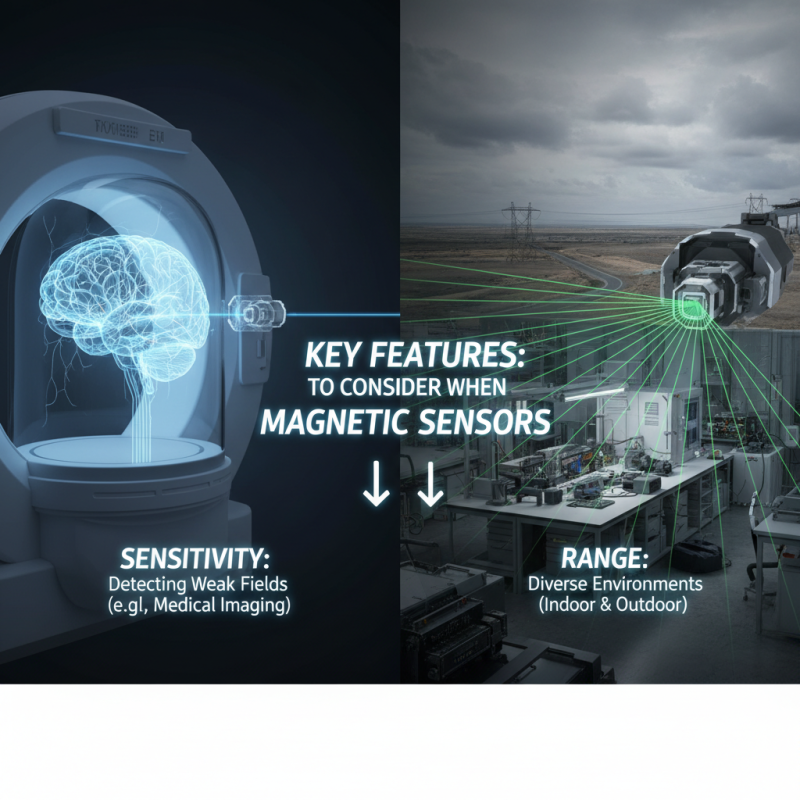
When selecting magnetic sensors for innovative applications, many factors come into play. Understanding the key features is essential. Sensitivity is a critical feature. High sensitivity allows for detecting weak magnetic fields. This is vital in applications such as medical imaging and automotive technologies. Next, consider the sensor's range. The ideal sensor should operate effectively in diverse environments, from indoor laboratories to outdoor industrial settings.
Another important aspect is temperature stability. Magnetic sensors should maintain accuracy across a range of temperatures. In industrial applications, temperature fluctuations are common. Therefore, a reliable sensor will function correctly under these conditions. Additionally, think about the sensor’s response time. Fast response times can make a significant difference in real-time applications, such as robotic systems.
Lastly, power consumption matters. With the growing demand for energy-efficient solutions, sensors that operate on low power are more desirable. These sensors not only save energy but also enhance battery life. Assessing these factors helps to avoid potential pitfalls and ensures the chosen sensor meets specific application needs. However, a careful balance is necessary, as overemphasizing one feature might compromise another.
The Future of Magnetic Sensors in Innovative Technologies and Applications
Magnetic sensors are becoming essential in innovative technologies. In various applications, these sensors offer precision and reliability. They are used in automotive systems, industrial automation, and consumer electronics. Their ability to detect magnetic fields enables advancements in location tracking and smart devices. As industries evolve, the demand for accurate sensing solutions grows.
However, the integration of magnetic sensors is not without challenges. Calibration, sensitivity, and noise interference remain significant issues. Engineers often face difficulties in achieving ideal performance under diverse conditions. Furthermore, environmental factors can affect sensor accuracy. Continuous innovation is necessary to address these complexities.
Future developments may focus on miniaturization and energy efficiency. Scientists are exploring new materials and designs to enhance sensor functionality. This may lead to breakthroughs in fields like robotics and healthcare. The journey toward fully realizing the potential of magnetic sensors invites ongoing research and collaboration among experts. It is crucial to remain aware of the limitations and strive for improvement.