Best Toroidal Transformer Options for Your Projects?
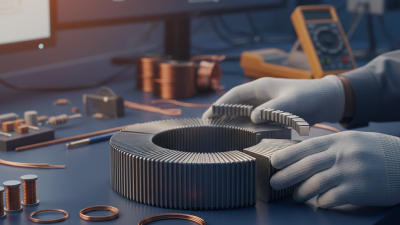
In the realm of electronic design, selecting the right components is crucial. Among these components, the Toroidal Transformer stands out for its efficiency and compact design. Industry reports highlight that these transformers can provide up to 20% less energy loss compared to traditional ones. This efficiency is a major factor for engineers and designers focused on sustainability.
However, despite their benefits, many practitioners may overlook the subtleties in their application. Some users report challenges with specific configurations and load requirements. For instance, pairing a Toroidal Transformer with incompatible circuit types can lead to performance issues. This necessitates a deeper understanding and careful consideration of specifications.
Moreover, expertise in selecting toroidal transformers can elevate project outcomes significantly. Reliable sources suggest that better choices can enhance power delivery and reduce electromagnetic interference. As such, evaluating the available options is essential for any project. By aligning your needs with the right Toroidal Transformer options, you can achieve optimal results while navigating the complexities of electrical design.
Best Toroidal Transformer Options for Your Projects
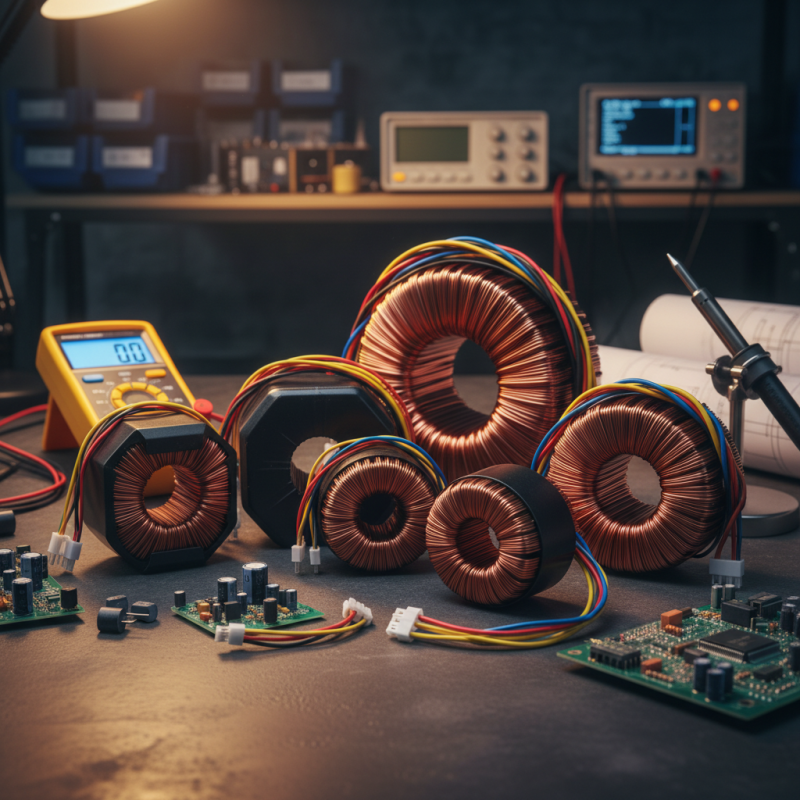
When it comes to selecting the best toroidal transformers for various projects, understanding their critical features is essential. Toroidal transformers are known for their compact size and efficiency. They reduce electromagnetic interference and energy loss. According to industry research, toroidal transformers can operate with efficiency ratings exceeding 95%. This high efficiency makes them appealing for audio and power applications.
Installation is another factor to consider. Some users find the mounting process challenging. A poorly mounted transformer can lead to performance issues. Additionally, while toroidal transformers are quieter than traditional models, they can still produce hum at higher loads. Understanding your power requirements is key to achieving optimal performance. Many experts suggest pairing these transformers with capacitors to enhance filtering and stability. Using accurate load calculations can help prevent underperformance.
In terms of versatility, toroidal transformers can handle a range of voltage outputs. However, not all projects may require such capabilities. For smaller applications, it might be more practical to opt for a standard transformer. This decision requires careful consideration of both cost and performance needs. Ultimately, the choice may come down to personal preference or specific application requirements. Experimenting with different configurations can help identify the ideal setup for unique project demands.
Understanding the Basics of Toroidal Transformers and Their Applications
Toroidal transformers stand out due to their unique design and efficiency. Unlike conventional transformers, they have a circular core. This shape reduces electromagnetic interference. Studies show toroidal transformers can achieve over 90% efficiency. They are commonly used in audio equipment and power supplies.
Understanding their applications is crucial. They provide stable voltage and low distortion. In sensitive electronics, this is vital. The compact design saves space in projects. Data from industry reports indicate that the demand for toroidal transformers is increasing by approximately 5% annually. Their ability to operate quietly makes them desirable for high-fidelity sound systems.
However, not all applications suit toroidal transformers. They can be more expensive than traditional options. Some users find installation challenging due to their weight and shape. Awareness of these factors can guide better project choices. Designers must weigh the benefits against potential drawbacks to make informed decisions.
Best Toroidal Transformer Options for Your Projects
Key Characteristics of High-Quality Toroidal Transformers to Consider
When selecting a toroidal transformer for your projects, consider several key characteristics. The first is efficiency. High-quality toroidal transformers reduce energy loss due to their design. This design minimizes electromagnetic interference, making them ideal for sensitive applications. They are compact, saving space in your projects. However, be aware that their size can also lead to difficulties in mounting and installation.
Another important factor is power rating. Ensure the transformer can handle your project's requirements. Overestimating power needs can lead to poor performance. Additionally, check the voltage specifications closely. Mismatches may result in equipment damage. Lastly, pay attention to the quality of materials used. Good materials enhance durability. They also reduce heat generation during operation. Yet, remember that not all high-priced options guarantee superior quality. Sometimes, the less known manufacturers can offer excellent value. Consider user reviews to gauge performance and reliability.
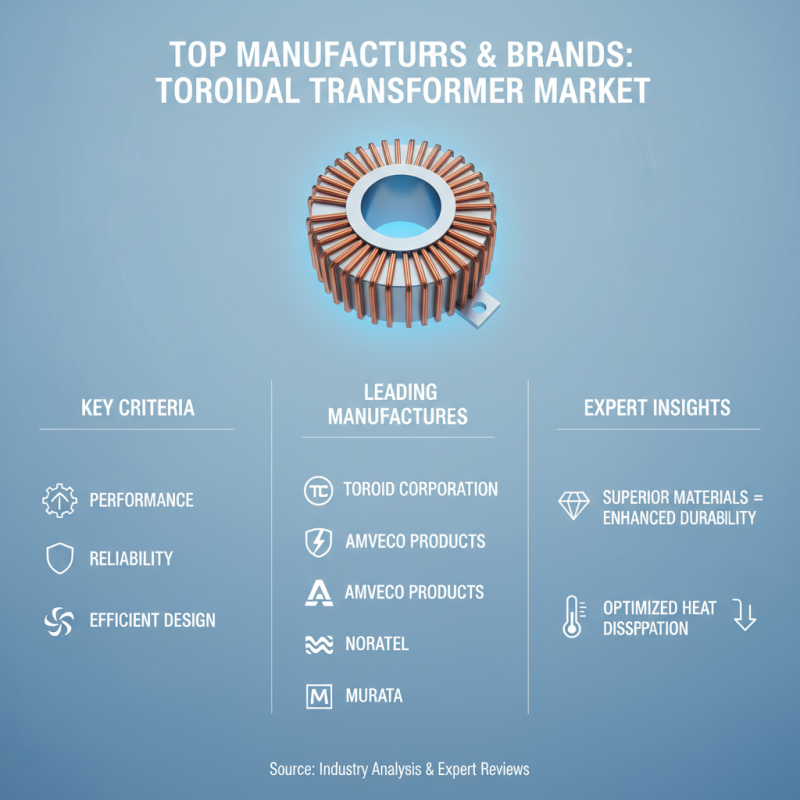
Top Manufacturers and Brands in the Toroidal Transformer Market
When it comes to choosing the best toroidal transformers, understanding top manufacturers is key. Several brands have forged reputations based on performance and reliability. Many experts emphasize the importance of evaluating their designs, which directly impact efficiency and heat dissipation. Leading manufacturers often utilize superior materials to enhance durability.
The market is filled with options, catering to diverse needs. Some brands are known for their compact designs, ideal for space-constrained projects. Others focus on high-power applications, showcasing robust performance. It's essential to assess specifications closely. Features like wattage and voltage ratings can significantly affect project outcomes.
Evaluating these options requires a critical approach. Not all offerings meet the highest standards. Some products may lack thorough testing. Additionally, customer feedback can reveal inconsistencies. Relying exclusively on brand names can be misleading. Professionals recommend extensive research to ensure you’re making informed choices for your specific requirements.
Comparative Analysis of Efficiency Ratings in Toroidal vs. Conventional Transformers
When comparing toroidal and conventional transformers, efficiency ratings play a crucial role. Toroidal transformers usually have higher efficiency due to their design. Their core is a continuous ring. This reduces energy losses caused by eddy currents. According to a report from the Electric Power Research Institute, toroidal transformers can achieve efficiency ratings of up to 98%. In contrast, traditional transformers typically range from 85% to 95%. This efficiency gap can impact both performance and operational costs.
The compact design of toroidal transformers allows for better thermal management. They generate less heat, leading to lower cooling requirements. Additionally, the lower noise pollution from toroidal transformers tends to enhance overall user experience. However, the initial cost can be higher, and installation may require specialized techniques. A study by the Institute of Electrical and Electronics Engineers emphasizes that while the upfront investment in toroidal designs is significant, the long-term savings can be substantial.
While toroidal transformers excel in efficiency, they may not be the best fit for all applications. Some users find the physical form factor challenging to integrate. Additionally, the market still holds a preference for conventional transformers in many settings, mainly due to their established presence. As the industry evolves, stakeholders must weigh these factors carefully. Understanding the nuances can lead to better decision-making for projects in need of reliable power solutions.
Best Toroidal Transformer Options for Your Projects? - Comparative Analysis of Efficiency Ratings in Toroidal vs. Conventional Transformers
| Type |
Power Rating (VA) |
Efficiency (%) |
Weight (kg) |
Noise Level (dB) |
| Toroidal |
500 |
95 |
5.0 |
30 |
| Toroidal |
1000 |
96 |
7.5 |
28 |
| Conventional |
500 |
87 |
6.0 |
45 |
| Conventional |
1000 |
88 |
9.0 |
50 |
Conclusion
The article "Best Toroidal Transformer Options for Your Projects" provides a comprehensive overview of toroidal transformers, detailing their fundamental characteristics and diverse applications. It begins by explaining the basics of toroidal transformers, highlighting their efficient design that minimizes electromagnetic interference and enhances performance. The discussion focuses on key features that distinguish high-quality toroidal transformers, including size, weight, and efficiency ratings.
In addition, the article offers insights into the leading manufacturers in the toroidal transformer market, presenting a comparative analysis of efficiency ratings between toroidal and conventional transformers. This section helps readers understand the advantages of selecting a toroidal transformer for specific project needs, guiding them through the decision-making process to ensure optimal performance in their applications. Overall, this resource serves as a valuable tool for anyone interested in the various options and considerations surrounding toroidal transformers.