Why Inductance Sensors Are Essential for Modern Technology Applications?
In today's rapidly advancing technological landscape, Inductance Sensors play a crucial role across various industries. Renowned expert Dr. Emily Chen, a leader in sensor technology, once stated, "Inductance Sensors are the backbone of reliable automation." This underscores their importance in ensuring efficient operations.
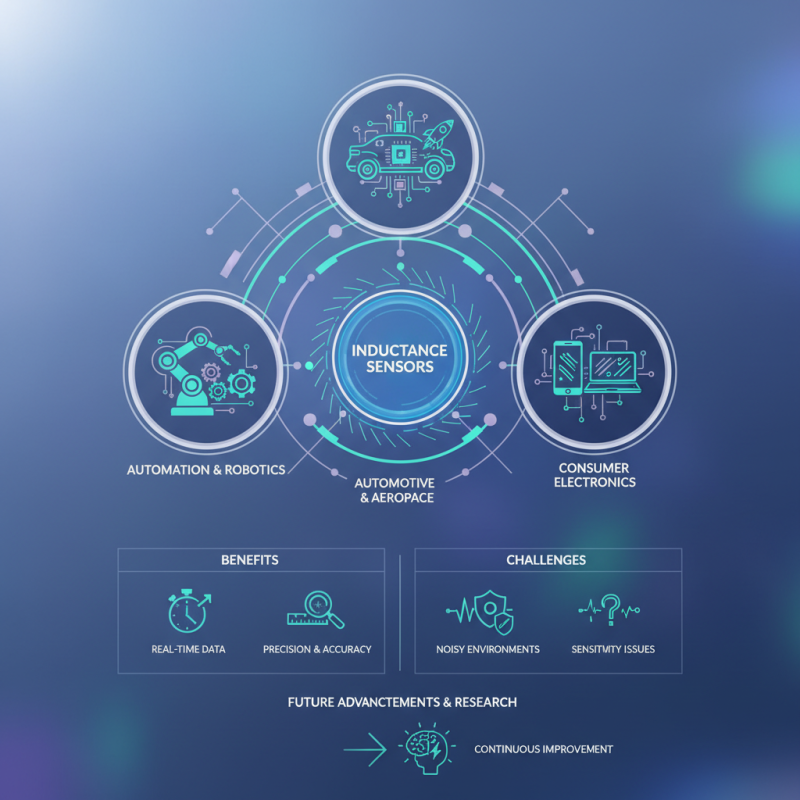
Inductance Sensors detect changes in the magnetic field caused by ferrous objects. They provide precise measurements vital for automation, robotics, and manufacturing. By offering real-time data, these sensors enhance system accuracy and reduce downtime. Despite their reliability, challenges remain. Some sensors may exhibit sensitivity issues in noisy environments, leading to potential errors.
The versatility of Inductance Sensors allows for applications in automotive, aerospace, and consumer electronics. However, understanding their limitations is essential. As with any technology, advancements are necessary to overcome existing hurdles. With ongoing research, the future of Inductance Sensors looks promising, yet continuous improvement is imperative.
Role of Inductance Sensors in Modern Technology
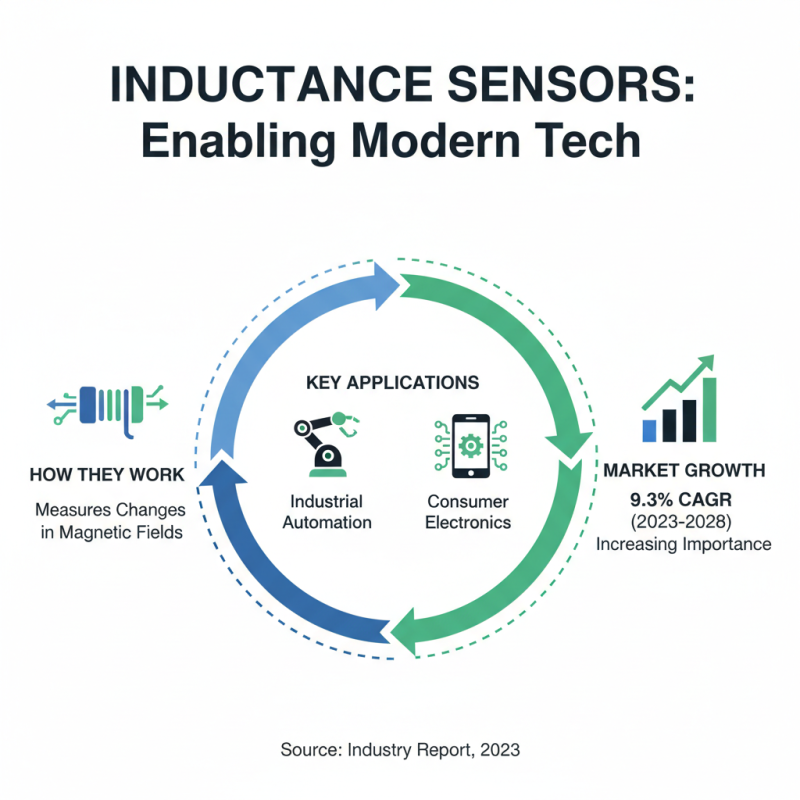
Inductance sensors play a crucial role in modern technology. These devices measure changes in magnetic fields, allowing for precise detection and control. They are widely used in various applications, such as industrial automation and consumer electronics. According to a recent industry report, the inductance sensor market is projected to grow at a CAGR of 9.3% from 2023 to 2028. This growth underscores their increasing importance in modern systems.
In manufacturing, inductance sensors ensure optimal performance. They detect changes in position and speed, which enhances quality control. For instance, in robotics, these sensors enable accurate motion tracking, leading to improved efficiency. Similarly, in automotive technologies, inductance sensors are essential for systems like anti-lock brakes, ensuring safety and reliability.
**Tip:** Regular maintenance of inductance sensors can enhance their accuracy and lifespan. This helps prevent unexpected failures and costly downtimes.
Despite their advantages, challenges persist. Factors like interference from electromagnetic noise can affect sensor performance. Additionally, installing these sensors requires careful consideration to avoid inaccuracies. As technology continues to evolve, addressing these challenges will be vital for maximizing the potential of inductance sensors.
**Tip:** Consider doing a site assessment before installation. This can help identify potential interference sources, increasing effectiveness.
Principles of Inductance and Sensor Functionality
Inductance sensors are pivotal in many modern technologies. These sensors operate on the principle of electromagnetic induction. When an alternating current flows through a coil, it generates a magnetic field. This field interacts with nearby conductive materials, inducing a voltage change. Inductance sensors can detect movement, proximity, and even changes in material composition. Their reliability makes them suitable for various applications.
Precision is one of the notable features of inductance sensors. They can measure very small distances with remarkable accuracy. Fields, such as automation and robotics, heavily rely on these sensors. However, the placement of sensors is crucial. Interference from surrounding materials may lead to inaccurate readings. Such challenges urge engineers to rethink sensor placement and design.
Inductance sensors also have applications in smart devices. They enable touchless controls, enhancing user experience. Despite their advantages, certain environmental factors can affect performance. For instance, high temperatures may alter inductance values. Continuous optimization of these sensors can improve their functionality. Engineers must remain attentive to these issues while advancing technology.
Why Inductance Sensors Are Essential for Modern Technology Applications? - Principles of Inductance and Sensor Functionality
| Application Area |
Inductance Sensor Type |
Sensitivity (mH) |
Frequency Range (kHz) |
Typical Use Case |
| Industrial Automation |
AC Inductive Proximity Sensor |
20 |
10 - 100 |
Object detection in manufacturing lines |
| Consumer Electronics |
Inductive Charging Sensor |
15 |
50 - 200 |
Mobile phones and wearables |
| Automotive |
Inductive Wheel Speed Sensor |
12 |
1 - 10 |
ABS systems and traction control |
| Healthcare |
Inductive Bio-Sensor |
5 |
100 - 500 |
Wearable health monitoring devices |
| Telecommunications |
Inductive Loop Sensor |
8 |
20 - 200 |
Traffic detection at signalized intersections |
Applications of Inductance Sensors in Various Industries
Inductance sensors play a vital role in various industry applications today. These sensors detect changes in inductance, which can be tied to position, movement, and proximity. In automotive manufacturing, they monitor component positions with high precision. This enhances vehicle safety and efficiency, making their implementation crucial.
In the medical field, inductance sensors contribute significantly to equipment reliability. They track movements in surgical tools or patient monitors. This ensures accurate readings in critical situations. Companies focused on healthcare innovations see these sensors as essential to improving patient outcomes.
Furthermore, inductance sensors are used in consumer electronics. They enhance device responsiveness by detecting user gestures. However, integrating these sensors can sometimes lead to unexpected performance issues. Developers must continuously refine their systems to achieve optimal functionality. This delicate balance highlights the ongoing need for expertise and adaptation in technology.
Advantages of Inductance Sensors Over Alternative Technologies
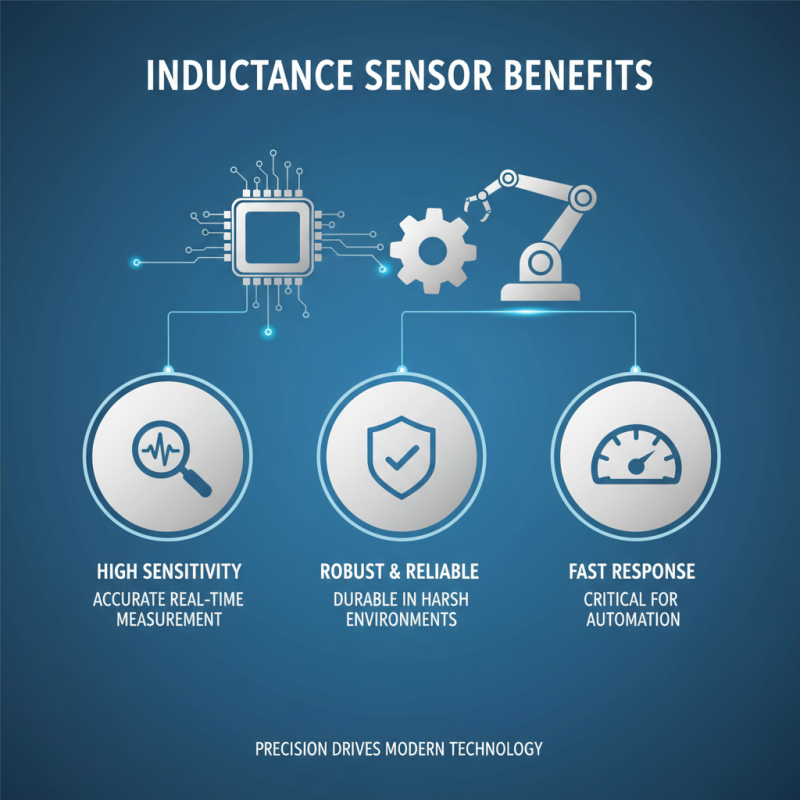
Inductance sensors are becoming vital in various modern technology applications. They offer several benefits that make them a preferred choice over other sensor technologies. One significant advantage is their high sensitivity. This allows for accurate measurement of inductance changes in real-time, which is crucial for many automated processes. In scenarios like manufacturing and robotics, precision is key. Any small error can lead to larger issues down the line.
Another compelling feature of inductance sensors is their ability to work in harsh environments. They are less affected by temperature, humidity, and dust compared to alternatives. This durability can reduce maintenance costs and downtime. However, their complex calibration needs might require specialized knowledge. Sometimes, they can be tricky to implement in existing systems without careful planning.
Moreover, inductance sensors can be compact and lightweight. This makes them ideal for integrating into tight spaces where other types may not fit. Despite their advantages, some users find them expensive. Cost concerns can hinder adoption in smaller projects. Balancing these factors with their benefits is crucial for making informed decisions in system design.
Future Trends in Inductance Sensor Development and Innovation
Inductance sensors are evolving rapidly, keeping pace with modern technology demands. Many industries now rely on their precision and reliability. As automation and smart devices become mainstream, inductance sensors must adapt. They are becoming smaller, more efficient, and increasingly sensitive.
Future trends indicate a push towards miniaturization. Smaller sensors can fit into tighter spaces and enhance design flexibility. Innovations in materials are also necessary. New composites offer improved performance in challenging environments. This development invites exploration in various applications. For example, robotics, healthcare, and renewable energy can benefit greatly.
Despite these advancements, challenges remain. Calibration and accuracy can fluctuate under different conditions. This can impact the reliability of certain applications. Developers must address these inconsistencies to ensure robust sensor performance. Continuous improvement and testing are essential in this dynamic field. The future is bright, yet there is still room for grow.
The journey of innovation requires a commitment to overcoming obstacles.