Choosing an Inductance Sensor supplier is not just a price comparison. A sensor may sit beside a motor, beneath a conveyor, or inside a compact machine enclosure. In each setting, detection distance, response time, mounting space, and resistance to electrical noise can affect performance. Small differences matter.
China’s manufacturers offer varied designs, from compact proximity sensors to products intended for demanding industrial environments. This guide examines ten companies and the practical details buyers should compare: product range, sensing specifications, customization, documentation, and support. A polished catalogue is useful, but it cannot replace clear test data. That distinction deserves attention.
The science behind these devices reaches back to Michael Faraday, a pioneer of electromagnetism. He wrote, “Nothing is too wonderful to be true, if it be consistent with the laws of nature.” His words are not a purchasing rule, of course. They do remind us to ask how a sensor’s operating principle supports its stated performance. Specifications can look precise on paper. Real installations are less tidy.
This overview is a starting point, not a substitute for application testing. Buyers should verify compatibility with their target material, operating conditions, and control system. A supplier’s response to detailed technical questions may be revealing. So may the gaps in its documentation.
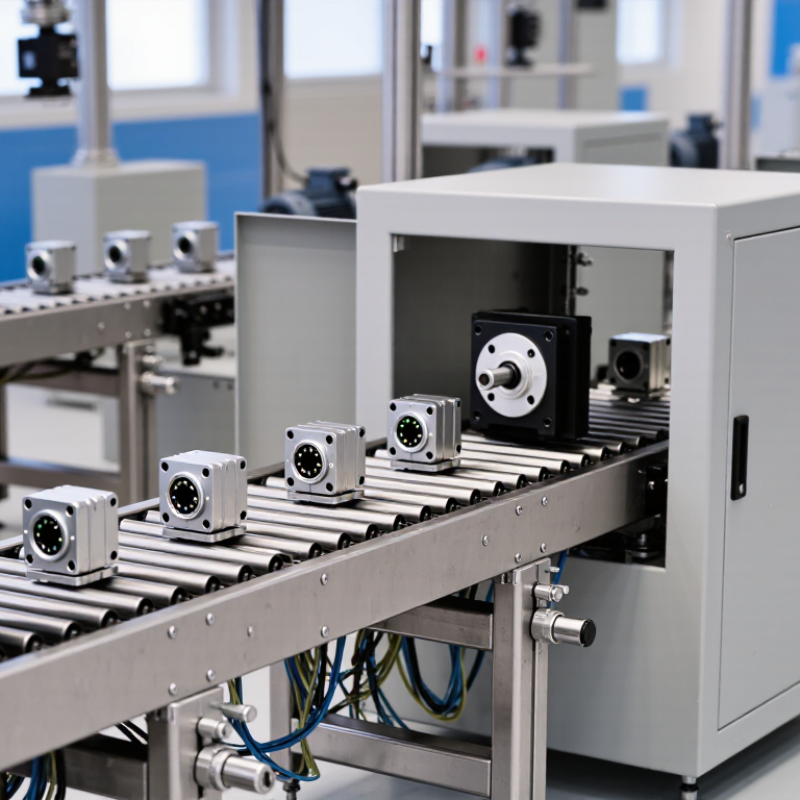
An inductance sensor uses a coil and an alternating electrical signal to detect changes nearby. The coil creates a changing magnetic field. When a metal target approaches, its magnetic properties or induced eddy currents alter the coil’s impedance. The electronics measure that change and convert it into a distance, position, or presence reading. Small gaps matter. A few millimeters can make a noticeable difference in some applications.
Variable-reluctance sensors respond to changes in a magnetic circuit, often as a toothed wheel passes the sensing face. Eddy-current sensors use a coil to detect currents induced in a conductive target, making them useful for non-contact distance measurements. LVDTs use mutual inductance: a movable core shifts the coupling between coils, producing a signal related to linear movement. These methods are related, but they are not interchangeable.
In practical selection, check the target material, sensing range, operating temperature, and nearby electrical noise. A steel target may behave differently from aluminum, even at the same distance. Calibration helps, though it cannot remove every installation effect. Sensor choice is not always obvious; the simplest-looking setup can still need testing. That is worth remembering.
When evaluating inductance sensor manufacturers in China, look beyond advertised accuracy. Ask how linearity and repeatability are tested, and request data across the sensor’s working range. A clear graph matters. Small measurement gaps can hide drift near the limits.
Check performance under real operating conditions. Temperature changes, vibration, and nearby metal can affect readings. Ask whether the manufacturer tests these factors and shares test methods, not just headline results. No single test tells the whole story. Compare samples using the same target, distance, and setup.
Production consistency matters as much as a strong prototype. Review inspection steps, calibration records, and the process for handling rejected units. Ask for technical drawings and tolerances before confirming a design. Technical support should explain wiring, mounting, and signal behavior in practical terms. Response time matters. A polished datasheet is useful, but it cannot answer every installation question. I would also check how readily a supplier discusses limitations; that can make comparisons slower, but it is worth the effort.
China’s inductance sensor manufacturers serve automation, machinery, and precision measurement applications. These ten profiles highlight different capabilities buyers can examine, rather than making unsupported claims about market rank. Check product specifications against the actual operating environment.
Profile one focuses on compact proximity sensors for confined machine layouts. Profile two emphasizes rugged housings for dusty production floors. Profile three offers custom sensing ranges for equipment integration. Profile four targets high-speed detection on moving lines. Small details matter. Cable length and connector type can affect installation time.
Profile five specializes in sensors for metalworking equipment, where vibration and coolant exposure deserve attention. Profile six concentrates on miniature components used in electronic assemblies. Profile seven provides options for conveyor and packaging systems. Profile eight highlights measurement stability across changing temperatures. Profile nine serves users seeking application engineering and tailored testing. Profile ten offers a broader catalogue for maintenance teams managing varied equipment. These distinctions are practical starting points, not proof of performance. Buyers should request test data, confirm sensing distance under real conditions, and review calibration procedures. Published information may not reveal every limitation, and comparisons can be awkward when specifications use different test methods. A factory trial is often worthwhile.
Comparing ten Chinese inductance-sensor manufacturers is more useful when product ranges are separated by application. Some suppliers focus on compact inductive proximity sensors for detecting metal parts on production lines. Others offer eddy-current probes for measuring shaft movement or vibration. A smaller group may provide custom coils and signal-conditioning electronics. These products are not interchangeable. Check sensing distance, target material, output type, and mounting space before comparing prices.
Technical capability shows up in the details. Ask for the operating frequency, linearity, repeatability, temperature drift, and response time, then compare test conditions. A sensor rated for a short range may still perform well near a hot motor, if its temperature compensation is documented. Look for clear wiring diagrams and calibration procedures, too. Small details matter.
Catalog figures can hide real differences. Request sample data from a test setup similar to yours, such as a steel shaft measured through a fixed air gap. Check whether performance changes with cable length or nearby metal. It is easy to overvalue a long feature list. I would also treat unsupported precision claims cautiously; supplier documents do not always describe the same test conditions. Ask specific questions, and record the answers.
Anonymized comparison of ten common supplier capability profiles. The rows are not a verified ranking or company-specific claims; specifications below are representative ranges found across industrial inductive sensor product categories. Confirm exact performance, certifications, and availability against each supplier’s current datasheet.
| Profile | Main Product Range | Typical Sensing Range | Common Outputs and Supply | Technical Capabilities | Typical Applications |
|---|---|---|---|---|---|
| 1. General-purpose cylindrical | M8–M30 threaded inductive proximity sensors; flush and non-flush versions | Approximately 1–15 mm, depending on housing diameter and target material | PNP or NPN; NO or NC; commonly 10–30 V DC | Standard switching detection for metal targets; common connector and cable options; protection commonly specified up to IP67 | Conveyors, packaging machinery, machine tools, and general factory automation |
| 2. Extended-range cylindrical | Larger M18–M30 housings and long-range proximity models | Typically several millimetres to around 20 mm; model- and target-dependent | PNP/NPN transistor outputs; DC supply commonly 10–30 V | Longer detection distance than compact standard models; flush/non-flush installation options; switching frequency varies by model | Position detection on presses, material-handling equipment, and larger mechanical assemblies |
| 3. Compact and miniature | M5–M8 miniature cylindrical sensors and compact threaded models | Usually around 0.5–4 mm, depending on sensor size and target | Commonly PNP or NPN DC outputs; cable or compact connector termination | Small housing for restricted mounting spaces; short sensing distance is typical of miniature formats | Small machinery, assembly fixtures, robotics end effectors, and electronics production equipment |
| 4. Rectangular and flat-body | Compact rectangular, flat, and block-style inductive sensors | Typically a few millimetres; exact distance depends on face size and housing design | PNP/NPN DC switching outputs; some product families offer NO/NC choices | Alternative mounting geometry for limited-depth installations; mounting holes or slots may simplify adjustment | Machine guarding, slide mechanisms, assembly lines, and position monitoring in confined spaces |
| 5. Ring and slot sensors | Annular sensors and fork/slot-style inductive detectors | Detection is defined by the ring opening or slot geometry rather than a conventional axial range | Usually DC transistor switching outputs; cable and connector options vary | Designed to detect metal parts passing through an opening or entering a slot; response and minimum target size are model-specific | Small-part counting, wire and fastener detection, feeding systems, and automated sorting |
| 6. Analog displacement | Inductive sensors with distance-proportional or position-measuring outputs | Short measuring spans, commonly a few millimetres; span depends on model | Examples include 0–10 V or 4–20 mA outputs; supply and wiring are model-specific | Provides a continuous measurement signal rather than only an on/off switching state; accuracy and linearity must be checked in the datasheet | Gap measurement, component positioning, runout monitoring, and process inspection |
| 7. High-speed switching | Fast-response cylindrical or compact inductive proximity sensors | Usually standard short-to-medium detection distances for the selected housing | Typically PNP/NPN DC switching; maximum switching frequency is model-specific | Selected for repeatable detection of rapidly moving metal targets; verify response frequency, target size, and installation conditions | High-speed counting, rotating equipment, packaging lines, and automated feeders |
| 8. AC and two-wire models | AC-operated or two-wire inductive proximity sensor families | Commonly short-to-medium sensing distances, depending on housing size | AC versions may support a broad mains-voltage range; confirm the rated voltage and load requirements per model | Can suit installations where a separate DC supply is not available; residual current and minimum load are important selection checks | Legacy control systems, simple industrial switching circuits, and retrofit installations |
| 9. NAMUR and hazardous-area systems | Low-current NAMUR-type inductive sensors, generally used with compatible interface equipment | Short detection distance, dependent on sensor design and target | NAMUR two-wire interface; typically requires a compatible isolating amplifier or barrier | Suitable for intrinsically safe system designs only when the complete installation meets the applicable approvals and entity parameters | Hazardous-area process monitoring and industrial installations requiring an intrinsically safe interface |
| 10. Custom and OEM-focused | Application-specific housings, cable lengths, connectors, sensing faces, and switching configurations | Defined by the selected sensor design; no single range applies | Often based on standard PNP/NPN or analog interfaces, with custom wiring or termination options by agreement | Potential for tailored mechanical integration and production-volume configuration; request drawings, validation data, and change-control details | OEM machinery, special-purpose automation, and projects with non-standard mounting or connection needs |
China’s demand for inductance sensors is closely tied to factory automation, electric-vehicle production, and precision equipment. These sensors detect metal targets without contact, making them useful where oil, dust, or vibration challenges mechanical switches. On an assembly line, they can confirm a fixture is locked or a steel part has reached a station. Small gaps matter. Mounting alignment and target shape can change readings, so application testing remains essential.
Machine tools use inductive sensing to monitor spindle components, tool positions, and moving slides. Automotive plants apply these sensors in automated handling and component inspection, while rail and infrastructure projects value rugged position feedback. Demand is also shifting toward compact housings, faster response, and stable operation near electrical noise. Integration is not magic. Designers still need to check sensing distance, temperature range, switching frequency, and connector protection against actual site conditions.
Market development in China reflects broader automation investment and closer attention to domestic component supply. Manufacturers are refining production consistency and offering more configurations for narrow spaces or harsh environments. Buyers increasingly compare repeatability, service life, and technical support—not just unit price. That comparison can be messy. Published specifications may not capture metal variation, nearby machinery, or installation errors; pilot trials often reveal these weaknesses. Recording test conditions and failure rates can help teams assess suitability before scaling a sensor across multiple production lines.