How to Choose the Right Toroidal Transformer for Your Project in 2026?
Choosing the right Toroidal Transformer for your project in 2026 involves more than just specifications. Expert David Reynolds emphasizes, "A well-chosen Toroidal Transformer can enhance efficiency and reduce noise." His insight illustrates the complexity of selection criteria.
In recent years, the industry has evolved significantly. Understanding your project's requirements is essential. The size, power rating, and configuration all impact performance. A Toroidal Transformer offers advantages such as compact design and low electromagnetic interference. However, not every transformer suits every application.
Despite their benefits, making the right choice can be challenging. Some may overlook heat dissipation or magnetic shielding. It's crucial to evaluate all aspects before purchasing. Your project's success depends on it.
Understanding Toroidal Transformers: Key Concepts and Benefits
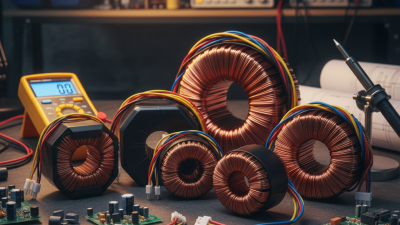
When selecting a toroidal transformer for your project, understanding the key concepts is crucial. Toroidal transformers have a doughnut-shaped core that enhances their performance. This unique shape reduces electromagnetic interference. It also allows for a more efficient magnetic field, which can be vital in sensitive electronics. Many appreciate how these transformers save space and weight compared to traditional models.
The benefits of toroidal transformers are numerous. They are known for their low noise operation. This makes them ideal for audio applications. Moreover, their efficiency in energy transfer can lead to less heat generation. However, the challenge lies in choosing the right specifications. If the voltage and current ratings are not precise, problems may arise. Improper selection can lead to inefficiencies or even failure. It’s essential to calculate requirements accurately.
Understanding the winding design is also important. It influences the transformer’s performance under different loads. Yet, many overlook this aspect initially. Engaging with professionals or conducting thorough research helps mitigate risks. Learning from those experiences can guide future projects. Always remember that the best choice enhances reliability and safety.
Sizing Your Toroidal Transformer: Voltage, Current, and Power Ratings
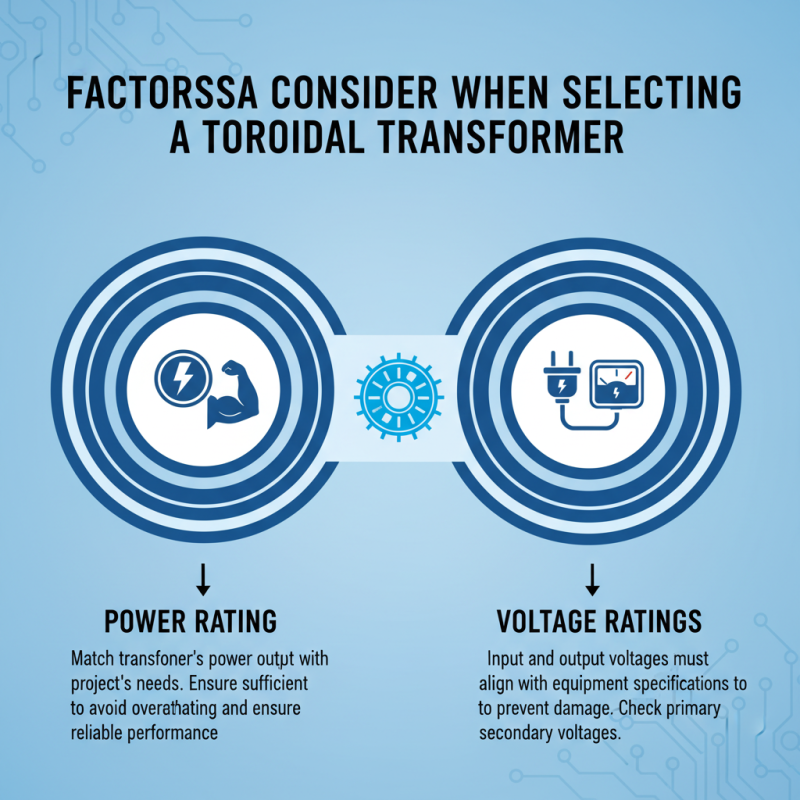
When selecting a toroidal transformer, specific ratings must be considered. Focus on voltage, current, and power. Each rating impacts the transformer’s performance in your project. Voltage ratings determine how much potential difference the transformer can handle without overheating. Choose wisely.
Current ratings define the maximum current your transformer can safely carry. Overloading it can lead to failure or inefficiency. Think about the load your project will demand. Ensure the current ratings align with your requirements for optimal performance.
Tip: Always consider a safety margin. Aim for a transformer with higher ratings than your project needs. This prevents overheating and prolongs lifespan.
Power ratings combine voltage and current to determine the overall capability of the transformer. Understand how these elements interact. Miscalculating can lead to inadequate performance or damage.
Tip: Look into dual-sourcing transformers. This can provide flexibility and contingency if one supply fails. It's crucial to have backup options for uninterrupted operation. Assessing these elements ensures your project runs smoothly and efficiently.
Evaluating Core Materials and Construction for Performance
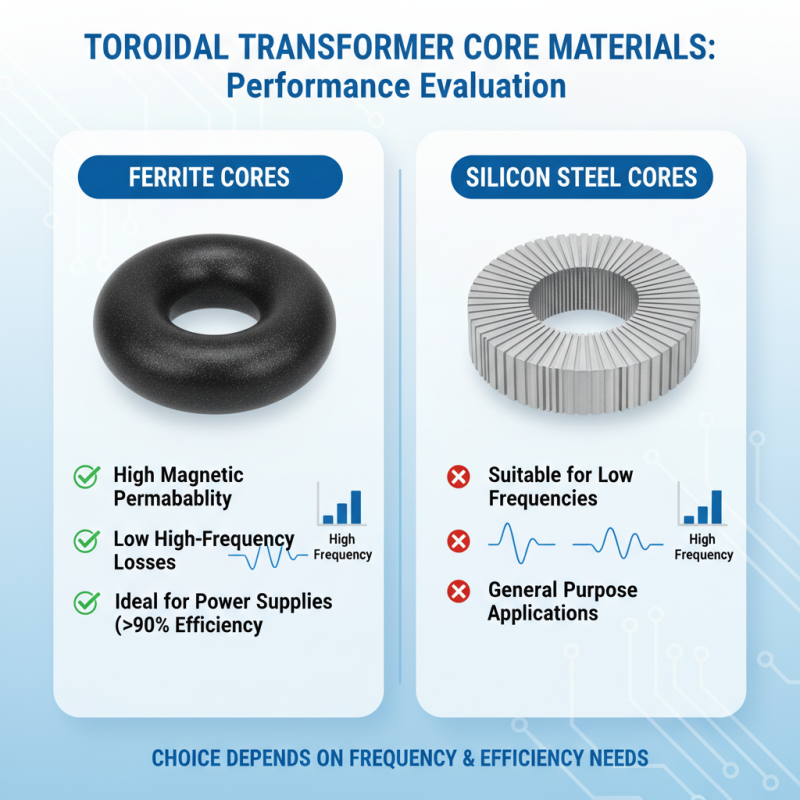
When choosing a toroidal transformer, core materials play a crucial role. Ferrite and silicon steel are common choices. Ferrite cores are known for their high magnetic permeability and low losses at high frequencies. In contrast, silicon steel is typically more suitable for lower frequency applications. According to industry reports, ferrite transformers can achieve efficiencies above 90%, making them ideal for power supply applications.
Construction quality is equally important. A tightly wound coil minimizes leakage inductance and improves efficiency. This is vital for applications requiring high precision, such as audio amplification. Research indicates that slight variations in winding techniques can affect performance by up to 20%. It's essential to evaluate these details carefully, as even small construction flaws can lead to significant performance losses.
Thermal management also cannot be overlooked. Transformers generate heat during operation, and the choice of core material impacts heat dissipation. Poor heat management can lead to reduced lifespan and performance levels. Studies suggest that using materials with better thermal conductivity can enhance overall efficiency. Therefore, while selecting a transformer, one must consider multiple factors, including core material, construction quality, and thermal management. This holistic approach ensures optimal performance for your specific needs.
Applications of Toroidal Transformers in Various Projects
Toroidal transformers have gained significant traction in various projects due to their compact size and efficiency. They are especially popular in audio equipment, power supplies, and renewable energy applications. According to a market research report by Research and Markets, the global toroidal transformer market is projected to grow by 7% annually until 2026. Their design minimizes magnetic flux leakage, enhancing performance in sensitive environments. This capability allows them to function effectively in high-end audio systems where clarity is critical.
In renewable energy, toroidal transformers support solar inverter systems. They improve efficiency by reducing energy losses, making them ideal for green technologies. A case study from the International Journal of Renewable Energy suggests that using toroidal transformers can increase overall system performance by up to 15%. However, these transformers can be more expensive than traditional options, potentially impacting budget constraints. This consideration demands careful evaluation in project planning.
Furthermore, industries such as medical equipment rely on the reliability of toroidal transformers. Their low electromagnetic interference (EMI) is crucial in these applications. Yet, assembling a toroidal transformer might pose challenges. Improper winding can lead to increased losses, highlighting the need for skilled craftsmanship. Balancing cost, performance, and application is essential for a successful outcome.
Applications of Toroidal Transformers in Various Projects - 2026