inquiry
Leave Your Message

Top 10 Current Sensor Applications You Should Know?

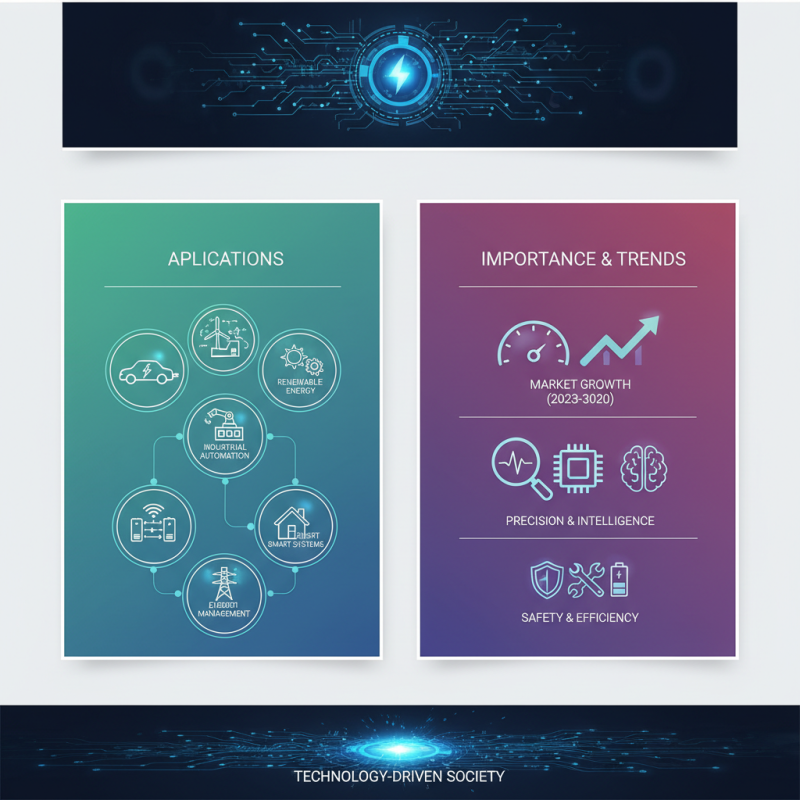
Current sensors play a crucial role in various industries today. Their ability to measure electrical current accurately drives efficiency in applications ranging from renewable energy systems to electric vehicles. According to a recent market report by ResearchAndMarkets, the global current sensor market is expected to grow at a CAGR of 10% from 2023 to 2030. This growth emphasizes the increasing reliance on current sensors across technological advancements.

Dr. Emily Chang, a leading expert in sensor technology, states, "The rise of smart systems necessitates precise current measurement for optimal performance." This highlights the integral role of current sensors in the evolving landscape of intelligent applications. Industries like automotive and renewable energy already depend heavily on these technologies, as they improve safety and enhance energy management.

Understanding current sensor applications can provide insights into future trends. Challenges exist; however, factors like sensor accuracy and environmental resilience must be addressed. As industries innovate, the demand for reliable current sensors will continue to rise, making them indispensable in our technology-driven society.
Top 10 Current Sensor Applications You Should Know?

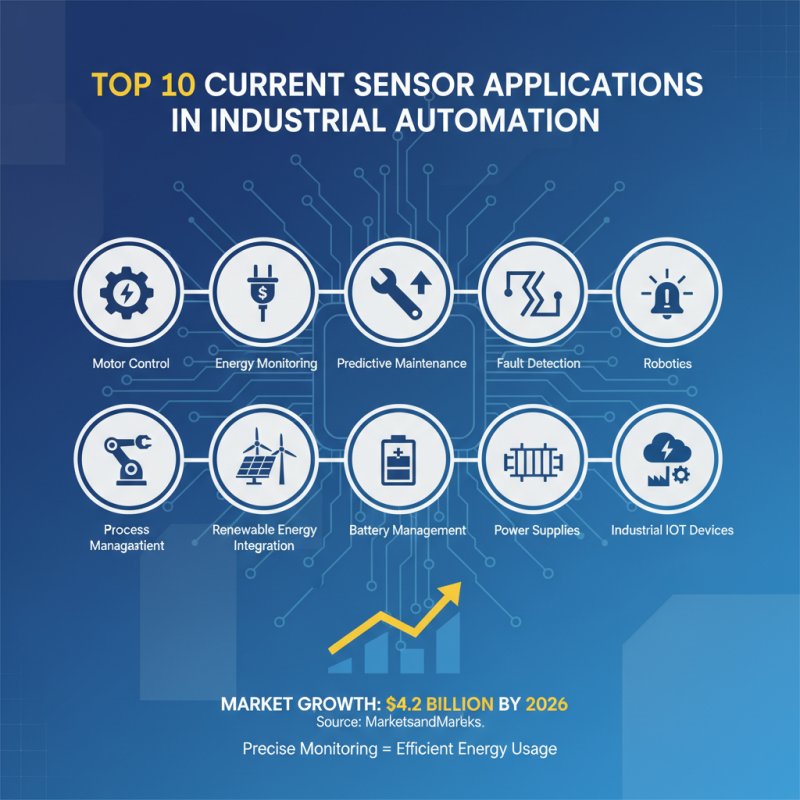
Top 10 Current Sensor Applications in Industrial Automation

Top 10 Current Sensor Applications You Should Know?

Current sensors play a pivotal role in industrial automation. They enable precise monitoring of electrical currents, which is vital for efficient energy usage. According to a report by MarketsandMarkets, the current sensor market is anticipated to grow to $4.2 billion by 2026, driven by rising demand across various sectors.

In the realm of industrial automation, applications range from motor control to power management systems. Current sensors help in detecting overloads in motors, preventing costly downtime. A study from the International Energy Agency indicates that optimizing energy consumption can reduce costs by up to 30%. With sensors, companies can achieve real-time monitoring, enhancing operational efficiency.

On the other hand, not every implementation is flawless. Some installations may suffer from calibration issues, leading to inaccuracies. A report from the IEEE highlights that about 15% of current sensor implementations experience challenges in signal integrity. This underlines the importance of ongoing training and system audits. Investing in skilled personnel ensures that the full potential of current sensors is realized in industrial settings.

Applications of Current Sensors in Renewable Energy Systems

Current sensors play a vital role in renewable energy systems. These sensors measure the flow of electric current in real-time. They help ensure optimal performance in solar and wind energy applications. For example, in solar power systems, current sensors monitor the output from photovoltaic cells. Any drop in performance can lead to inefficiencies. Timely detection can prompt maintenance or adjustments.

In wind energy, current sensors are used to track energy generation and monitor turbine performance. By analyzing current data, operators can prevent malfunctions. However, the technology isn't flawless. Inconsistent readings can occur due to environmental factors. This necessitates a more robust calibration process to ensure accuracy.

Renewable energy systems rely on data integrity. Faulty sensors can lead to wrong decisions, affecting energy output. It's crucial for engineers to continually evaluate sensor performance. Investing in reliable current sensors should not compromise quality. The goal is to enhance efficiency while addressing potential weaknesses in the system. Continuous improvement in sensor technology is essential for a sustainable energy future.

Top 10 Current Sensor Applications You Should Know

Application Description Benefits
Solar Energy Monitoring Using sensors to monitor the current output from solar panels for efficiency assessment. Increased efficiency, early fault detection.
Wind Turbine Control Current sensors help in managing the power output and optimizing performance of wind turbines. Improved energy output and operational safety.
Battery Management Systems Monitoring current flow in batteries to ensure optimal charging and discharging cycles. Prolonged battery life, increased reliability.
Electric Vehicle Charging Current sensors are utilized to manage charging processes and avoid overcurrent situations. Enhanced safety, efficiency in charging.
Smart Grids Integration of current sensors into smart grids for real-time energy monitoring and load balancing. Increased energy efficiency, improved grid stability.
Power Distribution Systems Current sensors optimize power flow and monitor for overload conditions in distribution networks. Reduced failures, enhanced service reliability.
Home Automation Current sensors are used in smart home devices to monitor power usage and optimize energy consumption. Cost savings, improved energy management.
Industrial Automation Monitoring current in industrial equipment for preventive maintenance and efficiency improvements. Minimized downtime, extended equipment life.
Renewable Energy Grid Integration Facilitating the integration of renewable sources by monitoring their outputs and managing demand response. Enhanced utilization of renewable sources, reduced carbon footprint.

Current Sensors in Electric Vehicle Technology and Charging Stations

Current sensors play a critical role in electric vehicle (EV) technology and charging stations. These sensors monitor and manage electrical currents with high precision. According to a report by MarketsandMarkets, the global current sensor market is projected to reach USD 2.65 billion by 2025. This growth is partly driven by the increasing adoption of electric vehicles.

In charging stations, current sensors ensure safe and efficient charging. They measure the amount of electrical current flowing to the vehicle's battery. Accurate measurements prevent overheating and potential damage. The sensors also help maintain optimal charging speeds based on battery requirements. This functionality is crucial as consumers demand faster charging solutions. A study by McKinsey indicates that 60% of EV users consider charging speed a top priority.

However, challenges remain. Current sensors must operate reliably under various environmental conditions. Extreme temperatures and vibration can affect their performance. Continuous innovations are needed to enhance sensor reliability and accuracy. Ongoing investment in research and development is vital for the future of current sensing technologies in EV applications.

Current Sensors for Smart Grid and Energy Management Solutions

The role of current sensors in smart grid and energy management solutions is vital. These sensors monitor electrical currents, providing real-time data for efficient energy usage. According to a report by MarketsandMarkets, the global current sensor market is projected to reach $3.36 billion by 2026, growing at a CAGR of 6.5%. This growth is attributed to the increasing demand for renewable energy integration and grid modernization.

Current sensors ensure effective energy distribution and reduce losses. By accurately measuring real-time current flow, they aid in predictive maintenance and load monitoring. A study from the International Energy Agency indicates that optimizing energy management through such technologies can cut global energy consumption by 10% by 2030. However, challenges exist. Not all regions adopt these technologies uniformly, and infrastructure discrepancies can hinder performance.

As the industry evolves, the need for standardized protocols becomes evident. This can improve communication between devices and systems, enhancing overall system reliability. Future advancements should focus on integrating current sensors with advanced analytics and machine learning for better decision-making and operational efficiency. Addressing these concerns is crucial for maximizing the benefits of smart grids and energy management.

Role of Current Sensors in Home Automation and IoT Devices

Current sensors play a crucial role in home automation and IoT devices. With the growth of smart homes, current sensors help monitor energy consumption. According to a recent industry report, energy management systems incorporating current sensors can reduce energy costs by up to 30%. This data emphasizes the importance of current sensors in today's energy-conscious society.

In smart appliances, current sensors detect usage patterns. They provide real-time feedback, allowing users to optimize their energy usage. For instance, intelligent lighting systems adjust based on occupancy. This adaptability leads to both convenience and energy savings. An estimated 60% of homeowners report reduced bills after implementing such technologies.

Moreover, current sensors enhance safety. They can detect anomalies such as overloaded circuits, shutting down devices when necessary. This feature is essential for preventing electrical fires. Still, the challenge remains to ensure all devices communicate effectively. Interoperability issues sometimes hinder seamless integration. As the IoT market matures, finding solutions to these obstacles will be pivotal.