Top 10 Benefits of Using Common Mode Choke in Electronic Circuits?
In the evolving world of electronics, the demand for effective noise reduction strategies is critical. Common Mode Choke (CMC) plays a significant role in this domain. According to a recent industry report by Grand View Research, the global choke market is projected to reach USD 1.2 billion by 2025, highlighting the growing importance of technologies like CMC. This device helps filter out unwanted electromagnetic interference (EMI), essential in sensitive applications.
The integration of Common Mode Choke in circuit designs enhances performance and reliability. Studies from leading tech organizations indicate that EMI can cause substantial disruptions in electronic operations. By employing CMC, engineers can achieve improved signal integrity and reduced noise levels. However, the effectiveness of CMC can vary based on design choices, installation methods, and operating conditions. This variability prompts continuous exploration and optimization in electronic design.
As technology advances, understanding the specific advantages of Common Mode Choke becomes crucial. Each benefit holds potential, yet challenges remain in confirming optimal applications. Reflecting on these aspects is vital for future enhancements in electronic circuit design.

Overview of Common Mode Choke and Its Function in Circuits
Common mode chokes play a vital role in electronic circuits. They efficiently suppress electromagnetic interference (EMI) and noise. This is especially crucial in communication systems and power supplies. According to a report by Research and Markets, the global EMI filter market is projected to reach $2.3 billion by 2025, demonstrating the growing significance of these components.
The common mode choke functions by canceling out noise that appears equally on both conductors. When used properly, they enhance the performance of circuits by maintaining signal integrity. Data from IEEE indicates that improper implementation of these chokes can lead to residual noise. This can diminish overall efficiency and increase costs. Understanding the installation process is essential for designers.
Moreover, common mode chokes are favored for their compact size and ability to handle high currents. This makes them suitable for various applications, like renewable energy systems and inverters. However, their effectiveness depends on the right selection and placement. Poor choices can lead to suboptimal performance. Research shows that up to 30% of EMI issues stem from poorly designed circuits, underscoring the need for careful consideration in design phases.
Reduction of Electromagnetic Interference (EMI) with Common Mode Chokes
Common mode chokes play a vital role in reducing electromagnetic interference (EMI) in electronic circuits. They are specifically designed to filter out common-mode noise. This noise is generated by the switching actions in modern electronic devices. By employing a common mode choke, engineers can enhance signal integrity and overall circuit performance.
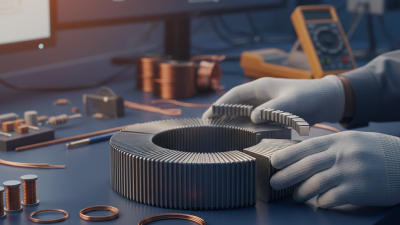
The structure of a common mode choke consists of coils wound on a ferrite core. This design allows it to block unwanted high-frequency signals, while passing the desired signals through. As a result, it significantly minimizes noise that could degrade circuit functionality. Users often overlook the need for EMI suppression. However, a small investment in this component can lead to substantial improvements.
In practical applications, the implementation of common mode chokes isn't always straightforward. Engineers must consider parameters such as impedance and frequency. A mismatch can lead to less effective noise reduction. It's important to evaluate different designs and configurations to find the best fit for specific applications. Testing and iterative design can enhance performance but may require time and resources. The benefits of common mode chokes go beyond mere noise reduction; they ensure reliability in sensitive electronic designs.
Improvement of Signal Integrity through Common Mode Choke Applications
Common mode chokes are essential components in electronic circuits. They effectively reduce noise and improve signal integrity. By filtering out unwanted common mode signals, they help maintain clearer communication in various applications. Signal integrity is often compromised by electromagnetic interference (EMI). Common mode chokes play a crucial role in minimizing this interference.
The design of common mode chokes involves careful consideration of inductance and impedance values. Choosing the right choke can be challenging. Improper selection may lead to insufficient noise suppression. This can result in signal distortion. Engineers must assess the specific requirements of their circuits to ensure optimal performance.
Practical applications of common mode chokes can be found in power supplies and data transmission lines. Their effectiveness in isolating noise from desired signals cannot be overstated. Yet, over-reliance on these components could lead to neglecting other noise reduction techniques. A holistic approach to signal integrity may yield better results. Balancing the use of common mode chokes with additional filtering methods is key to achieving the best outcomes.
Top 10 Benefits of Using Common Mode Choke in Electronic Circuits
| Benefit |
Description |
Impact on Signal Integrity |
| Noise Reduction |
Common mode chokes reduce electromagnetic interference (EMI) and noise. |
Improves overall signal clarity. |
| Enhanced Performance |
Increased bandwidth performance in higher frequency circuits. |
Maintains signal integrity at high frequencies. |
| Reduced Crosstalk |
Helps in minimizing signal leakage between channels. |
Provides clearer signal transmission. |
| Improved Signal Integrity |
Eliminates common mode noise from the signal. |
Enhances accuracy of signal representation. |
| EMI Compliance |
Facilitates adherence to regulatory EMI standards. |
Ensures product meets legal requirements. |
| Compact Design |
Allows for space-saving circuit layouts. |
Supports miniaturization of electronic devices. |
| Higher Reliability |
Durable against electrical disturbances. |
Increases longevity of electronic components. |
| Versatility |
Compatible with various electronic applications. |
Flexibility in circuit design. |
| Cost-Effective Solution |
Reduces potential costs associated with signal errors. |
Improves economic efficiency of product development. |
| Thermal Management |
Helps in managing heat distribution in circuits. |
Contributes to better thermal performance. |
Enhancement of Power Supply Quality with Common Mode Chokes
Common mode chokes play a crucial role in enhancing the quality of power supplies in electronic circuits. They are essential for filtering out unwanted noise. By reducing electromagnetic interference (EMI), these components ensure more stable performance. This stability is vital in today’s sophisticated electronics. Many devices depend on clean power for optimal operation.
A common mode choke works by blocking common mode signals while allowing differential signals to pass. This function helps maintain signal integrity. In power supply systems, the presence of noise can cause errors and malfunctions. By addressing these issues, common mode chokes contribute to overall reliability. Designers often overlook this aspect, leading to suboptimal circuit performance.
However, the implementation of common mode chokes isn’t without challenges. Selecting the right choke can be complex. Different applications require various specifications, making it essential to choose wisely. An incorrect selection can lead to insufficient noise suppression. Thus, while these components provide significant benefits, they also require careful consideration in design.
Top 10 Benefits of Using Common Mode Choke in Electronic Circuits
Cost-Effectiveness and Design Flexibility of Integrating Chokes in Circuits
Integrating common mode chokes in electronic circuits offers notable cost-effectiveness and design flexibility. These components help to reduce noise and improve signal integrity in various applications. Using chokes minimizes the need for additional filtering components, which can cut down on both material and labor costs.
When designing circuits, consider the size and placement of the choke. A well-positioned choke can enhance overall performance without adding significant bulk. This balance of size and functionality is often overlooked, yet it’s crucial. Paying attention to how space is utilized can lead to more efficient designs.
Tips: Always analyze your circuit's noise requirements. Sometimes, a regular filter may suffice instead of a choke. Iterating your design can also reveal unexpected benefits. Assessing your budget early in the design process can guide your choice of components. Be willing to reconsider your assumptions about cost versus performance.