Best Current Transformer Core Types for Efficient Power Measurement?
In the quest for accurate power measurement, selecting the right Current Transformer Core is crucial. Experts in the field emphasize the need for efficiency in design and material. Dr. Jane Smith, a recognized authority in current transformer technology, stated, "The choice of core material defines the performance and reliability of power measurement systems."
Current Transformer Cores vary significantly in types and materials. Each core has its advantages and drawbacks. For instance, silicon steel is commonly used for its cost-effectiveness but may not offer the best accuracy. In contrast, ferrite cores provide superior performance but come at a higher price. This dilemma often forces engineers to weigh cost against efficiency, leading to many challenges.
As the demand for precision increases, the focus on core technology also intensifies. Many professionals feel they lack the resources to make informed choices. Although the industry is evolving, some core types still fall short of expectations. The journey towards optimal current transformer solutions is ongoing.
Overview of Current Transformer Core Types and Their Applications
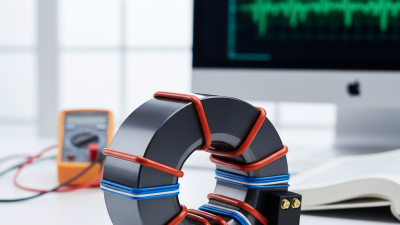
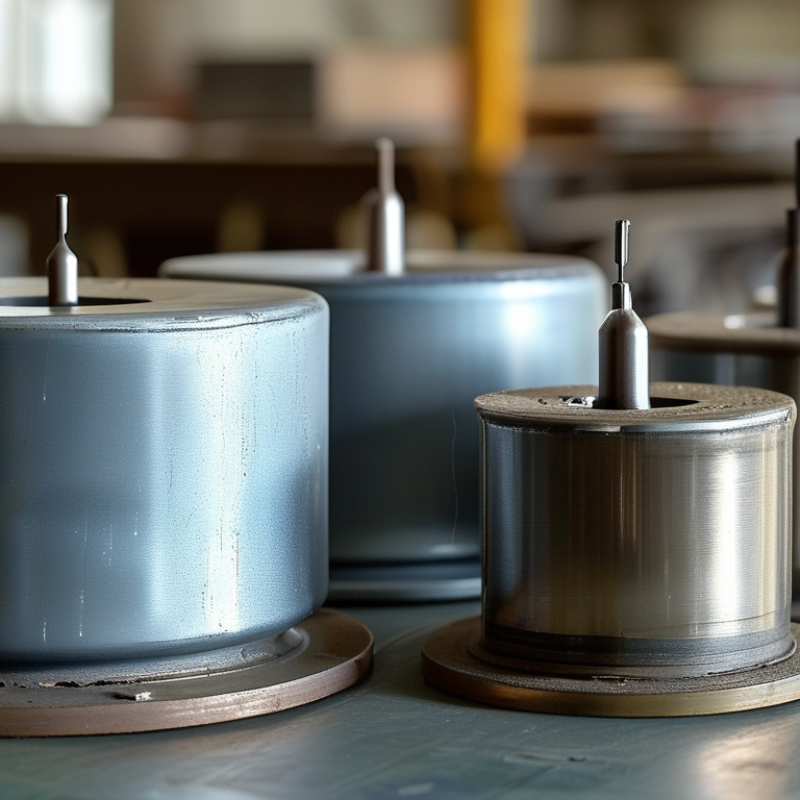
Current transformers (CTs) play a vital role in electrical metering and protection. They are essential for measuring alternating currents in high voltage applications. The core type of a CT directly affects its performance and accuracy. Different core materials are used for various applications, including silicon steel, ferrite, and amorphous steel. Each material has its specific advantages and limitations.
Silicon steel cores are common due to their good magnetic properties. They are efficient for general metering tasks. However, they might lack sensitivity at low currents. Ferrite cores are light and compact, suitable for high-frequency applications. Yet, they can saturate easily under heavy loads. Amorphous steel offers lower losses, improving energy efficiency. Still, they may be more expensive and less readily available.
These core types have unique characteristics that influence their applications. One must assess the trade-offs between cost, efficiency, and accuracy. Understanding these factors can help in choosing the right CT. It’s essential to weigh the benefits against specific measurement requirements. Selecting the ideal core type ensures reliable power measurement and enhances overall system performance.
Best Current Transformer Core Types for Efficient Power Measurement
| Core Type |
Material |
Application |
Advantages |
Disadvantages |
| Ferrite Core |
Ferrite Material |
High Frequency Measurement |
High sensitivity, Low losses |
Limited current range |
| Silicon Steel Core |
Silicon Steel |
Low Frequency Measurement |
Good magnetic properties, Durable |
Higher losses at high frequency |
| Amorphous Core |
Amorphous Steel |
Various Applications |
Reduced core losses, Wide frequency range |
Costly material |
| C-Ring Core |
Silicon Steel |
Energy Metering |
Simplicity of construction, Efficient performance |
Limited to specific geometries |
| Toroidal Core |
Soft Magnetic Material |
High Accuracy Measurement |
Low stray field, High accuracy |
Complex manufacturing |
High-Performance Materials Used in Current Transformer Cores
Current transformer cores are crucial for accurate power measurement in electrical systems. The choice of core material significantly influences performance and efficiency. Common materials include silicon steel, ferrite, and amorphous steel. Each type possesses unique characteristics that impact their operation. For instance, silicon steel offers high permeability but may generate more heat during high-frequency operations.
Ferrite cores are lightweight and exhibit low losses at high frequencies, making them ideal for compact devices. Reports suggest that ferrite-based transformers can achieve efficiency levels exceeding 95%. This high efficiency is essential in minimizing energy wastage. However, ferrites can be sensitive to saturation under high current conditions, necessitating careful design considerations.
Amorphous steel cores show promise due to their low energy losses and effective magnetic properties. Studies indicate that they can reduce energy loss by 30% compared to traditional silicon steel. This advancement is vital in enhancing grid reliability and reducing operational costs. Despite these benefits, the higher manufacturing cost remains a challenge. Testing and refinement of core designs are crucial for optimizing performance while managing expenses.
Comparative Analysis of Ferrite, Iron, and Amorphous Steel Cores
When evaluating transformer cores, three primary materials emerge: ferrite, iron, and amorphous steel. Each type has unique properties that influence power measurement efficiency. Ferrite cores are lightweight and exhibit high permeability, suitable for high-frequency applications. However, they can saturate at lower currents, limiting their effectiveness in certain scenarios.
Iron cores provide excellent conductivity, making them favorable for lower frequency applications. They are often robust and less prone to saturation, but may suffer from higher losses compared to other materials. Amorphous steel cores offer a middle ground, delivering low hysteresis losses and high efficiency. Their unique molecular structure reduces energy waste, but they can be more challenging to produce.
Tips: Consider the specific requirements of your application. Sometimes, a trade-off is necessary between size and efficiency. Always analyze the frequency and current range for optimal core selection. Be mindful of cost versus performance. Not every material fits every situation. Reflect on the long-term implications of your choice on measurement accuracy and device longevity.
Impact of Core Type on Power Measurement Accuracy and Efficiency
Selecting the right transformer core type is crucial for accurate power measurement. Different core materials affect the performance and reliability of current transformers. Ferrite and silicon steel are popular choices, each with unique characteristics. Ferrite cores provide high permeability and low losses at high frequencies. They excel in applications requiring precision. However, they might not perform well under extreme conditions, such as high temperatures.
Silicon steel cores, on the other hand, are robust and efficient for low-frequency measurements. They offer better handling of saturation, but can introduce errors due to hysteresis losses. Core design, including geometries and wound configurations, adds complexity. Flattened cores can reduce eddy current losses, but may increase manufacturing costs. This trade-off needs careful consideration.
Choosing the ideal core type is not straightforward. Users often face challenges in balancing cost, accuracy, and operational conditions. Field studies show that even slight variations in core properties can significantly impact measurement accuracy. Engineers must thoroughly assess application requirements. Regular evaluations can identify performance gaps and lead to improvements in design and implementation.
Recent Advances in Current Transformer Core Technology and Design Trends
Recent advancements in current transformer (CT) core technology have reshaped how we approach power measurement in various applications. New core materials enhance sensitivity and measurement accuracy. Soft magnetic materials, like amorphous steel and ferrites, provide substantial improvements. They reduce losses and improve efficiency in current sensing applications. The trend toward using nanocrystalline materials is also notable, as they deliver exceptional performance in compact designs.
Design trends focus on minimizing size without sacrificing performance. Innovations in winding techniques and core geometry contribute to this goal. Designers now consider thermal management more carefully, which affects overall reliability. Although progress is evident, challenges remain. Issues like saturation and bandwidth limitations are common in many designs. Researchers continue to explore solutions to these problems, reflecting a commitment to improving CT technology.
As the demand for efficient energy monitoring increases, ongoing development in CT cores is essential. The balance between cost and performance remains a point of reflection. Power measurement accuracy is critical for sustainable energy use. Innovations will play a pivotal role in meeting future energy challenges.