inquiry
Leave Your Message

China Top 10 Current Transformer Core Manufacturers?

China’s Current Transformer Core industry is becoming more important as utilities modernize substations, renewable-energy connections, and industrial distribution networks. The International Energy Agency reported in Electricity Grids and Secure Energy Transitions that more than 80 million kilometres of power grids may need to be added or replaced globally by 2040. Each new substation depends on accurate current measurement. That makes core material, magnetic performance, and manufacturing consistency decisive.

Market forecasts vary. Reports from MarketsandMarkets and Grand View Research both identify grid expansion, smart-grid investment, and industrial automation as major demand drivers for current transformers. Their figures differ because product definitions and regional coverage are not identical. That uncertainty deserves attention. A ranking should not rely on factory size alone.

Alexander Apostolov, an IEEE Fellow and recognized protection-engineering specialist, has repeatedly stressed a practical principle: “Protection begins with trustworthy measurements.” The Current Transformer Core is central to that trust. A poor core can create excessive excitation current, early saturation, and distorted relay signals. In a real substation, that may appear as a small waveform error before becoming a costly protection concern.

This guide examines China’s top ten manufacturers through technical capability, production experience, material control, testing procedures, certifications, and export reliability. It also considers silicon-steel grades, nanocrystalline options, dimensional accuracy, and application fit. No supplier is perfect. Buyer requirements differ. A compact metering core may not suit a high-fault-current protection transformer. The final choice should therefore follow verified test data, not promotional claims.
China Top 10 Current Transformer Core Manufacturers?

What Is a Current Transformer Core?

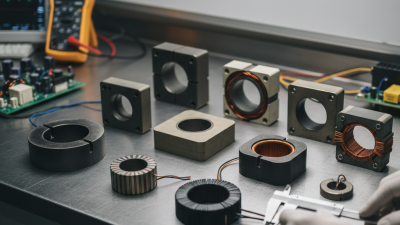
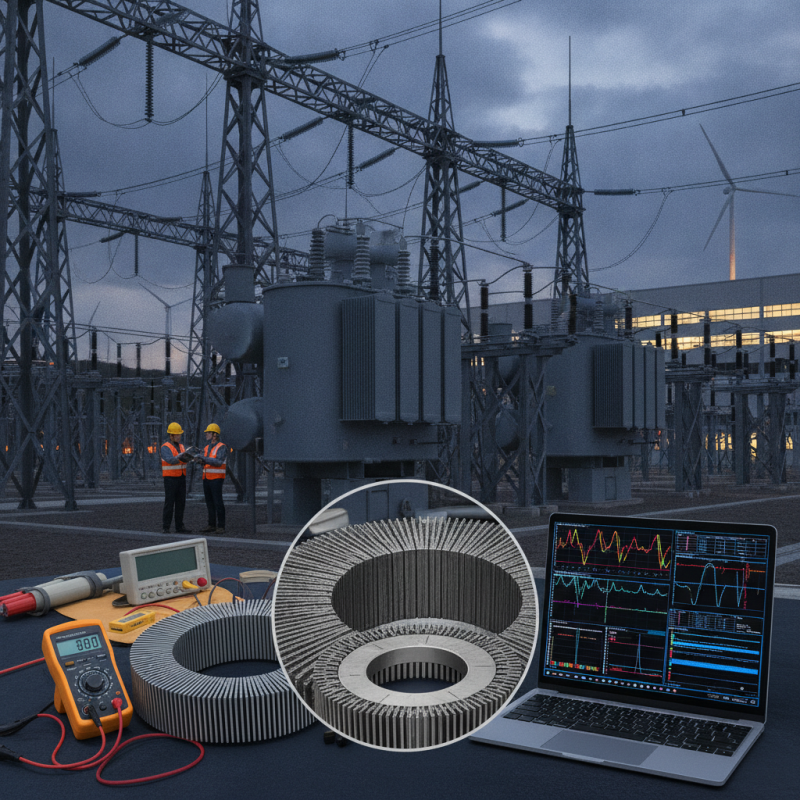
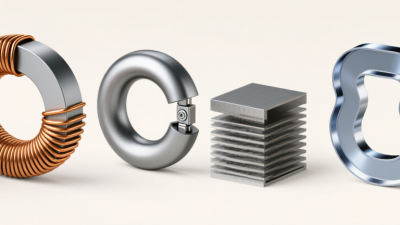
A current transformer core is the magnetic path that links the primary conductor to the secondary winding. It gathers magnetic flux from the primary current and helps produce a proportional current in the secondary circuit. The core is commonly built from thin electrical-steel laminations, stacked to limit energy loss from eddy currents. Some designs use a ring-shaped core; others use a rectangular frame. Small details matter.

Core material, dimensions, and assembly affect measurement accuracy. A narrow air gap or uneven stack can change magnetic reluctance, while sharp burrs may increase losses. If the core reaches magnetic saturation, its output may no longer track the primary current reliably. Engineers therefore consider current range, operating frequency, secondary burden, and the required accuracy class when choosing a design. A clean test result helps, but it does not tell the whole story.

In practice, the neat drawing may hide a less tidy manufacturing process. Even slight variation between laminations can influence performance, so inspection and testing are essential.

A current transformer’s secondary circuit also needs careful handling: opening it while the primary is energized can create a hazardous voltage.

The core is only one part of the assembly, but it shapes how faithfully the transformer measures current.
How Current Transformer Cores Are Manufactured in China

China’s current transformer cores are typically made from grain-oriented electrical steel, selected for its magnetic properties and consistent thickness. Production begins with coil inspection, then precision slitting and punching create narrow strips or shaped laminations. Operators check dimensions and edges because small burrs can increase losses or complicate assembly. Clean cuts matter.

The laminations are stacked into the specified core shape, with joints aligned to limit magnetic resistance. Depending on the design, manufacturers may use wound cores or assembled stacks, then secure them with clamps or other insulation-compatible materials. Some cores receive stress-relief treatment, but the process depends on the steel grade and product requirements. It is not one recipe. Testing often includes dimensional checks, visual inspection, and measurement of core loss or excitation behavior. Results help identify uneven stacking, damaged insulation, or poor joints before the core moves to transformer assembly. Factory practices vary, and a smooth-looking core does not prove consistent performance. Process records and repeatable measurements matter; even experienced teams can miss a subtle defect.

Typical saturation flux density of common core materials
Approximate values are material-level reference figures, not measurements from specific Chinese manufacturers. Actual values vary by alloy grade and processing. Core production commonly involves material preparation, cutting or slitting, core forming, annealing, assembly, and testing.

China’s Top 10 Current Transformer Core Manufacturers

China’s Top 10 Current Transformer Core Manufacturers

China’s current transformer core sector supports a vast and changing electricity network. The National Energy Administration reported that China’s electricity consumption reached about 9.85 trillion kilowatt-hours in 2024. That figure is not a direct measure of core demand, but it signals the scale of equipment needed for generation, transmission, and distribution. For buyers comparing ten manufacturers, production capacity alone tells an incomplete story. Core material consistency, dimensional accuracy, and documented magnetic performance matter just as much.

Look for test records covering core loss, excitation characteristics, and insulation-related requirements in the finished transformer. IEC 61869-2 provides requirements for inductive current transformers, while IEC 60404-2 describes measurement methods for magnetic properties of electrical steel. These standards help frame technical questions; they do not certify a supplier by themselves. Ask for traceable material certificates, sample inspection results, and evidence that production batches are controlled. A clean workshop and neatly stacked laminations are reassuring, but not proof. I would also compare delivery reliability and engineering support, though these can be harder to verify than a test report. A top-ten ranking should therefore be treated as a starting point, not a substitute for auditing actual parts.

China’s Top 10 Current Transformer Core Manufacturers

This is a technical reference table of ten established current-transformer core material and construction types, not a ranked list of companies. No company or brand names are included.

No. Core material or construction Common CT application Relevant characteristics Manufacturing considerations
1 Grain-oriented electrical steel, wound toroidal core Power-frequency metering and protection CTs Grain orientation supports efficient magnetic flux along the rolling direction; widely used in power-frequency equipment. Strip winding and controlled annealing help achieve the required magnetic properties; cutting or handling can introduce stress.
2 Grain-oriented electrical steel, laminated core Rectangular or window-type CTs for switchgear and power equipment Laminations limit eddy-current paths while providing a practical core shape for larger assemblies. Sheet cutting, insulation between laminations, stacking accuracy, and joint quality affect performance.
3 Nanocrystalline alloy, closed wound core Precision metering and residual-current sensing Can provide high permeability and low coercivity, making it suitable for sensitive measurement designs. Thin-ribbon handling and post-winding heat treatment require careful control; mechanical stress can affect magnetic behavior.
4 Nanocrystalline alloy, split core Retrofit and clamp-on CT assemblies The split construction allows installation around an existing conductor without disconnecting it. Core-face alignment, gap control, and repeatable closure are important to reduce measurement variation.
5 Amorphous alloy, wound core Low-loss power-frequency CT designs Amorphous alloys are known for low core loss; their thin ribbon structure differs from conventional electrical-steel laminations. Ribbon is relatively delicate, so winding tension, edge protection, and stress control matter.
6 Nickel-iron alloy, toroidal core Low-level current measurement and specialized instrument transformers Some nickel-iron alloys offer high permeability and low coercivity for sensitive magnetic applications. Alloy composition and heat treatment influence magnetic properties; application-specific testing is needed.
7 Nickel-iron alloy, laminated core Instrument CTs with non-toroidal core geometries Laminated construction can help control eddy currents while supporting a range of core shapes. Lamination insulation, joint design, and stress introduced during fabrication should be controlled.
8 Non-oriented electrical steel, laminated core General-purpose power-frequency current sensing Magnetic behavior is less dependent on direction than in grain-oriented steel, which can suit designs with varied flux paths. Stacking, lamination thickness, and insulation quality influence losses and consistency.
9 Soft ferrite core High-frequency current transformers and electronic sensing circuits High electrical resistivity helps limit eddy-current losses at higher frequencies; ferrite is generally less suited to high-flux utility CT designs. Core shape, material grade, operating frequency, and temperature range should be matched to the circuit.
10 Air-gapped ferrite core Specialized high-frequency current sensing and pulse applications An intentional gap changes the magnetic circuit and can help manage inductance and saturation behavior in suitable designs. Gap size and consistency are critical design parameters; performance must be verified at the intended frequency and current.

Key Differences Among the Leading Chinese Manufacturers

Chinese current-transformer core manufacturers differ less by catalog claims than by control of steel, cutting, stacking, and inspection. Some specialize in wound cores for compact instruments; others handle larger cores with step-lap joints. Grain-oriented electrical steel quality matters, but so does how consistently each strip is cut and assembled. Burrs, uneven gaps, or poor clamping can raise losses and affect measurement accuracy. Small details matter.

A useful comparison asks for measured core loss, dimensional tolerances, annealing controls, and batch traceability—not just nominal material grades. Ask how samples are tested, and whether production batches receive the same checks. This is where suppliers can differ sharply. A polished datasheet does not prove repeatable output; buyers should verify test records and sample consistency.

IEA’s 2023 report, Electricity Grids and Secure Energy Transitions, says annual grid investment needs to rise from about USD 300 billion to more than USD 600 billion by 2030. That forecast signals pressure for dependable equipment, but it does not rank core makers.

It is also easy to overvalue low quoted loss without checking the test conditions. Comparisons are imperfect. Requesting comparable test methods can expose the gap between a good sample and stable production.

How to Choose a Suitable Chinese Current Transformer Core Manufacturer

China Top 10 Current Transformer Core Manufacturers?

Choosing a suitable Chinese current transformer core manufacturer requires more than comparing prices. Start with the core material, such as silicon steel, nanocrystalline alloy, or nickel alloy. Each option affects accuracy, saturation performance, temperature stability, and cost. Ask for complete technical data, including permeability, core loss, excitation current, and dimensional tolerance. A serious supplier should provide traceable test reports and explain its inspection process clearly.

Review the manufacturer’s production experience with your transformer type and operating range. Request sample cores before approving mass production. Check winding window dimensions, surface finish, burr control, annealing records, and packaging protection. These small details can affect assembly and measurement accuracy. Confirm whether the supplier follows applicable international standards, such as IEC 61869-2, when relevant to your project. Factory audits are useful, although one visit cannot prove everything. A low quotation may hide unstable material quality or weak process control.

Tips: Compare at least three suppliers using the same specification sheet. Ask how rejected cores are recorded and handled. Verify test data with an independent laboratory for critical applications. Discuss delivery capacity during peak periods, not only normal weeks. Communication matters. If engineers answer vaguely, pause before ordering. No checklist is perfect; even experienced buyers can overlook long-term supply risks.imuhamed