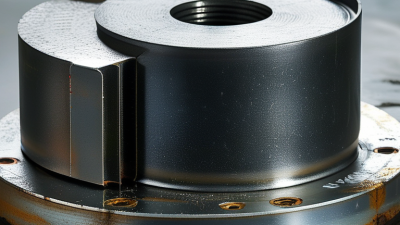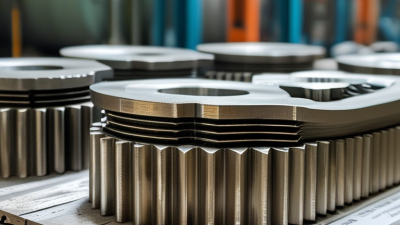
Choosing reliable Transformer Core suppliers in China requires more than comparing prices. Global buyers must examine magnetic performance, material consistency, production controls, and delivery capability. A high-quality core should show low core loss, stable permeability, accurate dimensions, and clean lamination or winding work. Small defects can create heat, noise, and efficiency problems inside a finished transformer.
This guide reviews suppliers through a practical purchasing lens. It considers manufacturing experience, testing equipment, quality certifications, customization support, packaging, and export communication. Factory audits, sample approval, and batch inspection remain valuable steps. They help buyers confirm whether documented claims match real production conditions. Look closely at grain-oriented steel, amorphous materials, toroidal designs, and other core options. Each has different electrical and commercial advantages.
Reliable suppliers should explain their tolerances clearly. They should also provide inspection records and responsive technical support. However, no supplier is perfect. Public information may be incomplete, and product quality can vary between batches. That limitation deserves attention. Buyers should request recent samples, test data, reference projects, and clear warranty terms before placing large orders. A polished website is not enough.
The following overview highlights Chinese manufacturers that serve industrial, renewable-energy, power-distribution, and electronic-transformer markets. It focuses on evidence rather than promotional language. The goal is simple: help global purchasers identify capable partners, reduce avoidable sourcing risks, and select a Transformer Core solution that performs reliably in actual operating environments. Cheerful promises are easy. Consistent results matter more.
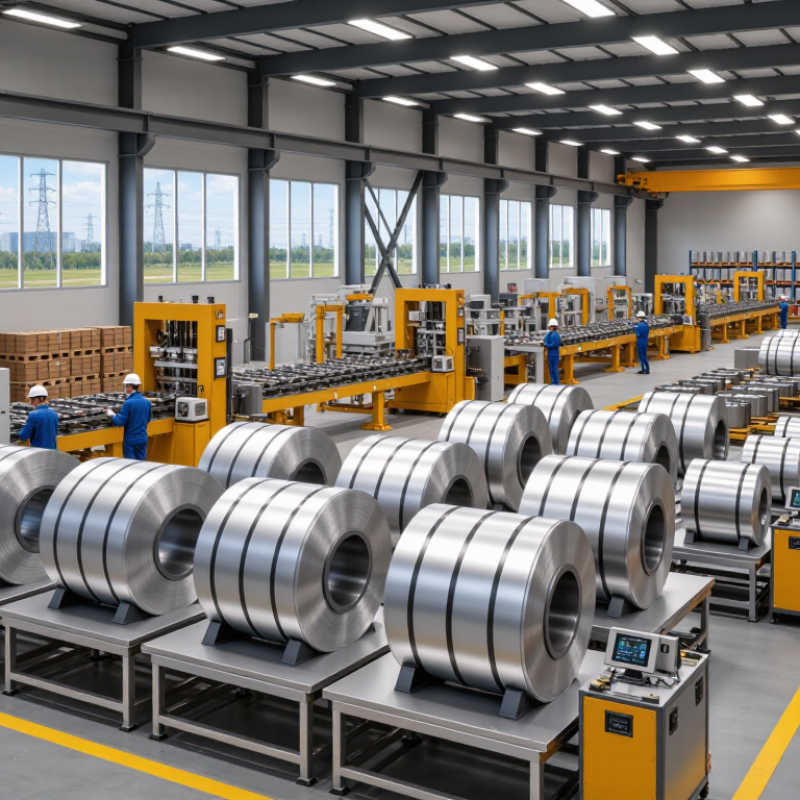
Transformer cores guide magnetic flux through a transformer’s windings. They are commonly made from laminated electrical steel, ferrite, or advanced magnetic alloys. Thin laminations reduce eddy-current losses and support cooler operation. Small gaps matter. Core shape also affects noise, efficiency, and available installation space.
Supplier selection directly influences these technical results. A capable supplier should provide steel grade details, core-loss data, dimensional tolerances, and traceable inspection records. During practical inspections, burrs on laminations often reveal weak process control. Poor stacking can increase air gaps and reduce magnetic performance. Testing reveals reality. Buyers should request sample measurements, not rely only on polished datasheets.
Manufacturing experience matters when cores must fit specific winding windows or withstand continuous thermal stress. Ask how the supplier controls annealing, cutting accuracy, stacking pressure, and protective packaging. Moisture-resistant packing is important during long ocean shipments. Communication quality also deserves attention. A supplier that answers clearly about defects, replacement procedures, and production capacity usually reduces project risk. Yet no supplier is perfect. Even strong factories may show minor tolerance changes between batches, so incoming inspection remains necessary. That difference matters. Clear specifications, repeatable testing, and honest technical discussions create a more dependable purchasing decision.
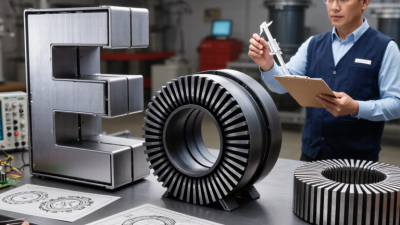
Chinese transformer core suppliers offer several core types for industrial, commercial, and renewable energy equipment. Choosing the right type depends on frequency, power rating, losses, and production volume.
EI laminated silicon steel cores remain common in power transformers and control units. Their stacked E and I shapes simplify winding and assembly. Suppliers can provide different steel grades, lamination thicknesses, and insulation coatings. Thinner laminations usually reduce eddy-current losses, but they may raise material and processing costs. Ask for test data.
Toroidal cores suit compact transformers, audio equipment, and low-noise power supplies. Their continuous magnetic path can reduce leakage flux and audible vibration. C-cores provide efficient magnetic performance and easier winding access. However, their air-gap design needs careful control during assembly. Small fitting errors can affect inductance.
Amorphous metal cores help reduce no-load losses in energy-efficient distribution transformers. Nanocrystalline cores support high-frequency applications, including power supplies and current transformers. Ferrite cores are also widely used for high-frequency switching designs. They offer low losses at suitable frequencies, but mechanical strength requires attention. A practical supplier should share dimensional drawings, loss curves, permeability data, and inspection records. Sample testing is still necessary, because published values may not match a finished batch. Even experienced buyers sometimes overlook clamping pressure and burrs on cut edges. These details can influence heat, noise, and long-term stability.
| Transformer Core Type | Typical Core Material | Common Frequency Range | Key Structural Feature | Typical Applications | Main Advantages | Important Selection Considerations |
|---|---|---|---|---|---|---|
| EI Laminated Core | Grain-oriented silicon steel | 50–60 Hz | E-shaped and I-shaped laminations are stacked to form a magnetic circuit with a central leg. | Linear power transformers, control transformers, isolation transformers, and low-voltage power supplies. | Simple construction, economical tooling, easy winding access, and broad availability in standard sizes. | Check lamination grade, stack height, air-gap design, insulation coating, core loss, and power rating. |
| UI Laminated Core | Grain-oriented silicon steel | 50–60 Hz | U-shaped and I-shaped laminations create a compact magnetic path and can support separated windings. | Control transformers, safety transformers, industrial power supplies, and compact low-frequency transformers. | Flexible winding arrangement, robust mechanical design, and convenient assembly for certain enclosure layouts. | Evaluate window area, insulation distance, clamping method, temperature rise, and required mounting orientation. |
| EE Ferrite Core | MnZn or NiZn ferrite | 20 kHz–500 kHz | Two E-shaped halves form a central magnetic leg and one or more winding windows. | Switch-mode power supplies, DC-DC converters, LED drivers, adapters, and high-frequency transformers. | High electrical resistivity, low eddy-current loss at high frequency, and extensive standardized geometries. | Select material by operating frequency, flux density, temperature, core loss, creepage distance, and effective air gap. |
| EF / EFD Ferrite Core | MnZn ferrite | 50 kHz–500 kHz | Low-profile E-shaped geometry provides a relatively wide winding window with reduced overall height. | Thin adapters, compact chargers, telecom power supplies, auxiliary power modules, and consumer electronics. | Space-efficient profile, suitable for automated assembly, and useful where board height is restricted. | Verify creepage and clearance, bobbin compatibility, pin layout, thermal path, and allowable winding volume. |
| ETD Ferrite Core | MnZn ferrite | 20 kHz–300 kHz | Round or cylindrical center leg improves winding utilization while retaining a large window area. | Medium-power switch-mode transformers, welding inverters, industrial converters, and battery chargers. | Good power-handling capability, efficient use of copper, and practical bobbin-based construction. | Compare effective core area, window area, thermal performance, winding fill factor, and switching waveform. |
| EC / EER Ferrite Core | MnZn ferrite | 20 kHz–300 kHz | E-style geometry with a rounded or modified center leg helps balance winding space and magnetic performance. | High-frequency power converters, resonant transformers, solar inverters, and industrial electronic equipment. | Useful compromise between power density, winding area, and mechanical packaging requirements. | Review mating accuracy, air-gap tolerance, bobbin availability, core loss at temperature, and insulation system. |
| PQ Ferrite Core | MnZn ferrite | 20 kHz–250 kHz | Compact pot-like profile provides a high effective core area relative to the external volume. | High-density power supplies, telecom equipment, server power systems, and compact DC-DC converters. | High power density, efficient magnetic utilization, and reduced occupied volume for a given power level. | Pay close attention to thermal dissipation, bobbin dimensions, winding clearance, and core temperature limits. |
| Toroidal Core | Silicon steel, ferrite, nanocrystalline, or amorphous alloy | 50 Hz–200 kHz | A continuous ring-shaped magnetic path minimizes air gaps and distributes flux around the circumference. | Audio transformers, current transformers, medical equipment, low-noise power transformers, and EMI filters. | Low magnetic leakage, low audible noise when properly designed, and high magnetic-path efficiency. | Consider winding equipment, insulation methods, hole diameter, outer diameter, height, inrush current, and heat removal. |
| C-Core / Cut Core | Grain-oriented silicon steel, amorphous, or nanocrystalline alloy | 50 Hz–100 kHz | A strip-wound magnetic circuit is cut and usually assembled with controlled mating surfaces. | Precision transformers, audio transformers, power transformers, reactors, and low-loss inductive components. | Efficient magnetic path, lower loss than many conventional stacked structures, and convenient winding before final assembly. | Inspect cut-surface quality, joint design, clamping pressure, air-gap control, insulation, and mechanical protection. |
| Amorphous Metal Core | Amorphous iron-based alloy | 50–60 Hz | Thin rapidly solidified alloy ribbon is wound or formed into a closed magnetic circuit. | Energy-efficient distribution transformers, high-efficiency power transformers, and specialized reactors. | Very low no-load loss compared with conventional electrical steel in suitable designs. | Confirm operating flux density, mechanical handling requirements, protective coating, noise performance, and joint integrity. |
| Nanocrystalline Core | Nanocrystalline iron-based alloy | 1 kHz–100 kHz | Ultra-fine crystalline alloy ribbon is wound into a toroidal, cut, or other closed-core configuration. | High-frequency transformers, common-mode chokes, current transformers, pulse transformers, and power-factor correction equipment. | High permeability, high saturation flux density, and low loss across many medium- and high-frequency designs. | Specify permeability, saturation flux density, core loss at actual frequency and temperature, annealing condition, and insulation. |
| Powder Core | Iron powder, sendust, or powdered ferrite | 10 kHz–1 MHz | Magnetic powder is compacted with distributed air gaps, providing a controlled and distributed magnetic reluctance. | Energy-storage inductors, coupled inductors, EMI suppression components, and selected high-frequency transformer designs. | Distributed gap, gradual saturation behavior, and suitability for energy-storage applications. | Check permeability under DC bias, temperature stability, core loss, mechanical strength, and required winding insulation. |
Technical note: Frequency ranges and application examples are typical engineering guidelines rather than fixed limits. Final core selection should be verified against the supplier’s material data, effective magnetic parameters, operating temperature, flux density, insulation system, applicable safety requirements, and the transformer’s intended duty cycle.
Global electricity demand is expected to grow by 3.4% annually through 2026, according to the IEA Electricity 2024 report. This growth increases pressure on transformer supply chains. China manufacturers should therefore be evaluated through measured performance, not catalog claims. Request core-loss data at the exact operating frequency and flux density. For example, a report showing 0.90 W/kg at 1.7 tesla and 50 Hz is more useful than a vague “low-loss” statement.
Check whether the supplier follows IEC 60404-2 or equivalent national methods. Ask for Epstein test results, stacking-factor records, burr measurements, and material certificates. Three recent production batches can reveal variation. One sample cannot. The U.S. Department of Energy has identified transformer components as a constrained grid-supply item, with some procurement lead times extending beyond one year. Capacity planning now matters as much as price.
A factory audit should examine slitting lines, annealing controls, automated stacking, and finished-core inspection. Look for clean floors and protected steel edges. Small scratches can become larger losses during assembly. Confirm traceability from electrical steel coil to final core number. Also review corrective-action records, not only quality certificates. A polished factory tour is not proof. I would avoid suppliers who refuse raw test files or independent inspection. Delivery history, packaging strength, export documentation, and communication during a failed batch deserve equal attention. That last test is often forgotten.
Quality begins with measurable control. The International Energy Agency’s Electricity Grids and Secure Energy Transitions report projects 80 million kilometres of new or refurbished grids by 2040. That demand raises pressure on transformer suppliers. Buyers should request core-loss data, steel grade records, stacking-factor controls, and traceable inspection reports. IEC 60076 testing should cover routine checks, temperature rise, insulation strength, and no-load losses. A serious factory can show calibrated equipment and recent test samples. Photos alone are weak evidence.
Customization must match the installation, not only the purchase order. Suppliers may adapt voltage ratios, core windows, cooling systems, noise limits, and enclosure dimensions. Ask for 2D drawings before production. Confirm terminal positions and transport weights.
Production capability also matters. Check cutting accuracy, automatic stacking, annealing control, winding capacity, and final testing space. A factory with many machines is not automatically reliable. Process discipline matters more. This is where buyers sometimes misjudge suppliers.
Tips: Request a sample inspection plan. Compare guaranteed losses with measured losses. Ask how rejected laminations are handled. Review one complete quality record, not a polished brochure. A perfect specification rarely exists. Small dimensional changes can affect installation, cost, and delivery. Allow room for technical correction before signing. The IEA data shows infrastructure demand is rising, but expanding capacity does not remove manufacturing risk.
Global buyers should evaluate transformer core suppliers through documents, samples, and repeatable production evidence. Share the core drawing, steel grade, dimensions, stacking factor, insulation requirements, and annual volume before requesting prices. Ask for tolerance data, test methods, and a production sample. An unusually low quote may exclude tooling, inspection, or inland freight. Clarify Incoterms, payment milestones, warranty scope, and change-control procedures in the purchase contract. Keep every revision traceable.
Request material certificates, factory test records, and declarations relevant to the destination market. For electrical applications, confirm the required IEC or national standards with your engineer and importer. Do not accept copied certificates without checking dates, product scope, and issuing laboratory. Some markets require additional labeling, energy documentation, or customs information. Document the HS classification with a qualified customs professional, because errors can delay release. Compliance is not a checkbox.
Core laminations can bend or rust during long-distance transport. Use moisture barriers, edge protection, desiccant, and shock indicators inside sturdy export crates. Confirm crate dimensions, gross weight, lifting points, and container suitability before booking space. Before loading, arrange a pre-shipment inspection covering quantity, dimensions, packaging, and markings. Photograph seals and record them against the shipping documents. Build buffer time around port congestion and holiday closures. Schedules slip. A practical warning is that even careful plans fail when a drawing revision reaches the factory late, so written approval should control production.
These indicative planning ranges show the usual business days required for technical review, sampling, production, export documentation, and ocean transportation. Actual schedules vary by specification, order quantity, destination, and customs requirements.