inquiry
Leave Your Message

What Are the Top Common Mode Choke Types in 2026?

In 2026, choosing a Common Mode Choke still begins with the interference problem, not a product ranking. A choke that works well on a compact sensor board may be unsuitable for a power cable carrying higher current. Core material, impedance across the relevant frequency range, rated current, and winding layout all affect performance. Small details matter. A warm component or a noisy test trace can reveal what a datasheet alone cannot.

EMC engineer and author Henry Ott wrote, “The best way to solve EMC problems is to prevent them from occurring in the first place.” That principle helps explain why common-mode chokes remain useful, but they are not universal fixes. This guide compares familiar types, including ferrite-core, nanocrystalline-core, toroidal, surface-mount, and leaded designs. Each brings trade-offs in size, frequency response, current capacity, and ease of assembly.

The “top” choice depends on the circuit. A power converter, an automotive harness, and a communications interface face different noise conditions. Even two similar boards can behave differently after layout changes. That part is easy to underestimate. The sections ahead outline where each type fits, what specifications deserve attention, and which practical checks can prevent a poor selection. Some comparisons remain imperfect because real performance depends on the circuit, installation, and measurement setup. That is worth remembering.
What Are the Top Common Mode Choke Types in 2026?

Common Mode Chokes: Operating Principles and Key Design Features

A common-mode choke uses two windings on one magnetic core. Normal load currents flow in opposite directions, so their magnetic flux largely cancels. Common-mode noise flows in the same direction through both conductors, adding flux and meeting the core’s impedance. The choke then reduces noise current without intentionally interrupting useful power.

A useful detail: cancellation is never perfect. Unequal winding turns, layout, or load currents can leave differential-mode noise behind.

Core shape and material influence impedance, size, and high-frequency behavior. Ferrite cores are common in compact power and signal filters; nanocrystalline cores can provide high permeability in some designs. Neither material wins in every circuit.

Winding placement also matters: tighter coupling can improve common-mode performance, while parasitic capacitance may weaken attenuation at higher frequencies.

CISPR 32’s conducted-emissions test band spans 150 kHz to 30 MHz, giving engineers a defined range for evaluating noise on applicable ports. That band is a starting point, not a complete design target. Measure the actual circuit, including its cables and enclosure. A choke that looks adequate on paper may perform poorly after installation.
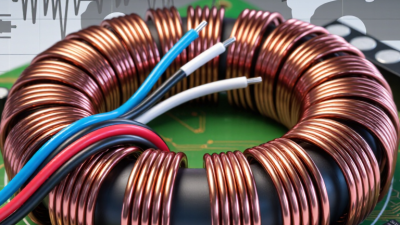
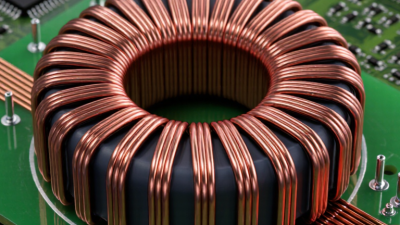
Ferrite-Core Common Mode Chokes for Broad Frequency Filtering

What Are the Top Common Mode Choke Types in 2026?
Ferrite-Core Common Mode Chokes for Broad Frequency Filtering

Ferrite-core common mode chokes are widely used to reduce unwanted noise on power and signal lines. Their paired windings oppose normal differential current while presenting impedance to common mode noise. In practice, this can help limit interference across a useful frequency range. The exact range depends on the ferrite material, winding design, and circuit layout.

A choke’s impedance curve is a useful starting point, not a guarantee of performance. At higher frequencies, parasitic capacitance between windings can reduce its effectiveness. Check the manufacturer’s specifications, then test the choke in the real assembly. A short cable, a metal enclosure, or nearby components can change the measured result. Small details matter.

Choose a part that fits the current, voltage, and operating temperature of the application. Also check its differential-mode behavior: an unsuitable choice may add unwanted impedance to the signal or power path. Ferrite cores come in different compositions, and each has its own frequency response. Broad filtering does not mean equal attenuation everywhere. That distinction is easy to miss. A modest bench test with the intended wiring can reveal gaps that a tidy datasheet curve does not show.

What Are the Top Common Mode Choke Types in 2026? - Ferrite-Core Common Mode Chokes for Broad Frequency Filtering

Common-mode choke performance depends on core material, winding arrangement, parasitic capacitance, impedance, and the circuit layout. Frequency descriptions below are general selection guidance, not guaranteed operating limits for every component.

Choke Type Core or Construction Typical Frequency Focus Main Strength Key Consideration Common Applications
Broadband ferrite-core wound choke Conductors are wound together on a ferrite core; material and winding geometry vary by design. Broadband filtering; usable range depends on ferrite grade and parasitic effects. Combines a compact magnetic core with common-mode impedance across a useful range of frequencies. Check the impedance-versus-frequency curve and rated current; winding capacitance can reduce high-frequency performance. Power-input filters, cable interfaces, and conducted-noise suppression.
MnZn ferrite common-mode choke Manganese-zinc ferrite core, commonly used where high permeability is useful. Often selected for lower-frequency conducted interference; the exact range is design-dependent. High permeability can provide substantial impedance at comparatively low frequencies. Core properties, operating temperature, and current-related bias effects should be checked in the component data. Power converters, mains filters, and low-frequency conducted-emissions control.
NiZn ferrite common-mode choke Nickel-zinc ferrite core, generally suited to higher-frequency use than many MnZn grades. Often chosen for higher-frequency noise, including RF-related interference. Can be useful where suppression is needed at frequencies above the main operating band of many MnZn designs. Verify impedance over the target band; high-frequency behavior is strongly affected by winding and layout parasitics. Signal cables, communication interfaces, and higher-frequency noise filtering.
Multi-section or wideband ferrite choke Uses multiple winding sections, core sections, or a tailored winding arrangement to shape the response. Designed to cover a wider frequency span than a narrow-band solution; actual coverage varies by design. Can help address more than one noise band in a single filtering component. Confirm insertion loss and impedance in the assembled circuit, since a wide response is not guaranteed by construction alone. Broadband cable filtering, mixed-signal equipment, and systems with multiple noise bands.
Surface-mount common-mode choke Compact, matched windings on a ferrite core, packaged for direct mounting on a circuit board. Ranges from lower-frequency interface filtering to higher-frequency signal-line filtering, depending on part design. Small footprint and straightforward integration close to a connector or circuit interface. Match the part to the signal type, line impedance, current rating, and required differential-signal bandwidth. USB, Ethernet, display, audio, and other board-level interfaces where a suitable part is specified.
Power-line ferrite common-mode choke Wound ferrite core with conductors sized for the intended supply current. Primarily used to reduce conducted common-mode noise on power lines; frequency response is part-specific. Provides a filtering element that carries supply current while impeding common-mode noise. Check rated current, temperature rise, insulation requirements, and differential-mode behavior in the full filter. AC/DC power supplies, motor drives, and other power-conversion equipment.

Nanocrystalline and Amorphous-Core Chokes for High Attenuation

What Are the Top Common Mode Choke Types in 2026?
Nanocrystalline and Amorphous-Core Chokes for High Attenuation

Nanocrystalline-core chokes are valued for high permeability and strong common-mode noise suppression in compact designs. Their cores can deliver useful impedance across demanding frequency ranges. Actual results depend on core shape, winding, and operating conditions. A material name alone proves little.

Amorphous-core chokes offer another option for filtering conducted interference. Their magnetic characteristics can support effective attenuation while helping manage core losses. Compare impedance curves across the frequencies that matter in your circuit, not just a single headline value. For example, test the choke near switching harmonics and inspect temperatures under realistic load. Small installation details matter. Keep leads short, and check that the choke does not interfere with differential-mode signals. Selection can be fiddly; the first choice may need revision after measurements.

Tips: Verify performance with a common-mode test setup, and compare results before and after installation. Check current rating, temperature rise, and frequency response. Leave room for adjustment. The enclosure and nearby wiring can change results.

Toroidal and Wound Chokes for Power and Signal Lines

What Are the Top Common Mode Choke Types in 2026?

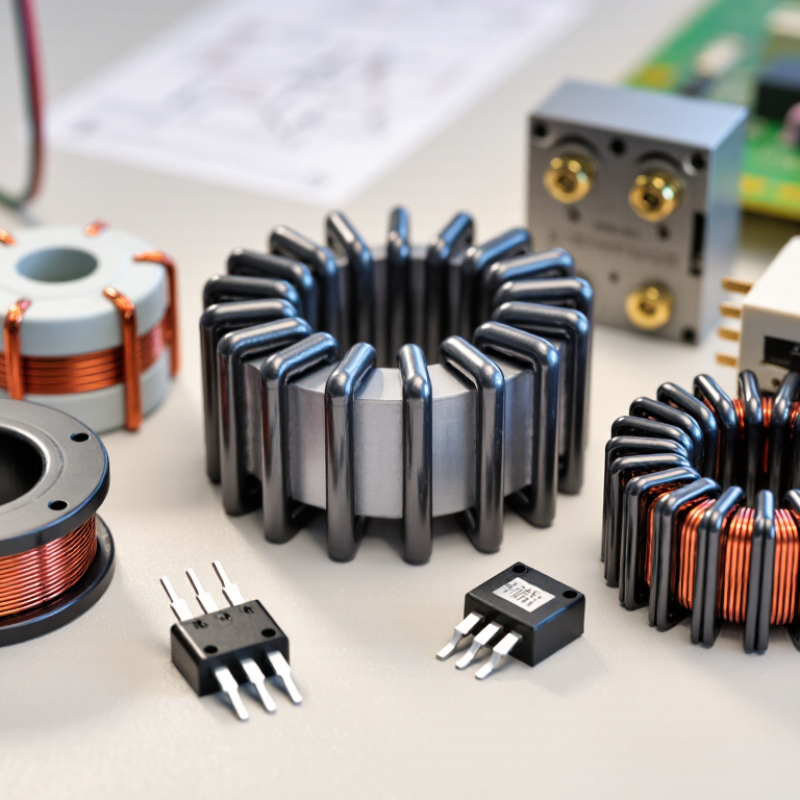
Toroidal and wound designs are common choices for suppressing unwanted noise on power and signal lines. A toroidal choke uses a ring-shaped core, creating a compact magnetic path with relatively low leakage. Its paired windings help oppose common-mode noise while allowing normal differential signals or current to pass. Details matter. “Wound” describes how conductors are arranged around a core, so a toroidal choke is also a type of wound choke.

On power lines, choose a choke that tolerates the expected current without excessive heating or magnetic saturation. Check its impedance across the noise frequencies of concern, not just one headline value. A component that performs well on paper may behave differently after installation. PCB layout and nearby conductors can affect results.

Signal-line chokes need a careful balance: enough common-mode impedance to reduce interference, but low enough parasitic capacitance to preserve useful signals. Consider data rate, signal rise time, and the circuit’s impedance. A larger choke is not automatically better. For either application, compare the datasheet conditions with the real operating environment, then verify performance in the assembled circuit. That step is easy to underestimate.

Compact Chip and Surface-Mount Chokes for Modern Electronics

What Are the Top Common Mode Choke Types in 2026?
Compact Chip and Surface-Mount Chokes for Modern Electronics

Compact chip chokes suit dense circuit boards in phones, sensors, and small control modules. Their multilayer construction saves space, but performance can vary with frequency and package size. Surface-mount wire-wound chokes often handle higher currents and offer stronger filtering in a larger footprint. Both types reduce unwanted common-mode noise while allowing the intended signal to pass. The best choice depends on the circuit, not the label.

Tips: Check impedance curves across the frequencies causing trouble. Compare rated current, winding resistance, and package dimensions. Place the choke near the noise entry point, often a connector. Keep input and output traces apart where practical. Small layout choices matter.

A choke alone rarely fixes every emissions or signal-integrity issue. Board traces, grounding, and nearby capacitors also shape the result. A part with impressive impedance figures may disappoint if its useful range misses the actual noise. Bench testing can reveal that gap. It is an imperfect step, but simulation and datasheets cannot capture every real-board detail. Recheck temperature rise and signal quality in the final layout.