Leave Your Message
Choosing a Transformer Core supplier in China involves more than comparing unit prices. Global buyers must examine electrical performance, production discipline, and the evidence behind each specification. A neat sample is not enough. Ask how the manufacturer controls steel sourcing, cutting accuracy, burrs, lamination stacking, and annealing where applicable. These details can affect core loss, noise, and consistency between batches.
An illustrative expert voice, Dr. Lin Wei, frames the decision this way: “A low quoted price means little unless core loss, build quality, and delivery consistency are measured together.” This is a buyer’s principle, not a verified quotation from a published interview. It points to a practical question: can the supplier support claims with relevant test data, clear tolerances, and repeatable inspection records? Request details for the core design and operating conditions under review. Compare like with like.
This guide introduces leading Transformer Core manufacturers in China for international buyers. It considers product range, technical capability, quality controls, customization, communication, and export experience. Look for specifics: sample reports, packing methods that protect thin laminations, and realistic production timelines. Shortlist carefully. A polished website cannot replace technical review. Nor does one delayed reply prove poor factory performance. Supplier assessment takes judgment, and some evidence may remain incomplete. The following overview offers a structured starting point, not a substitute for verifying each company’s current capabilities.
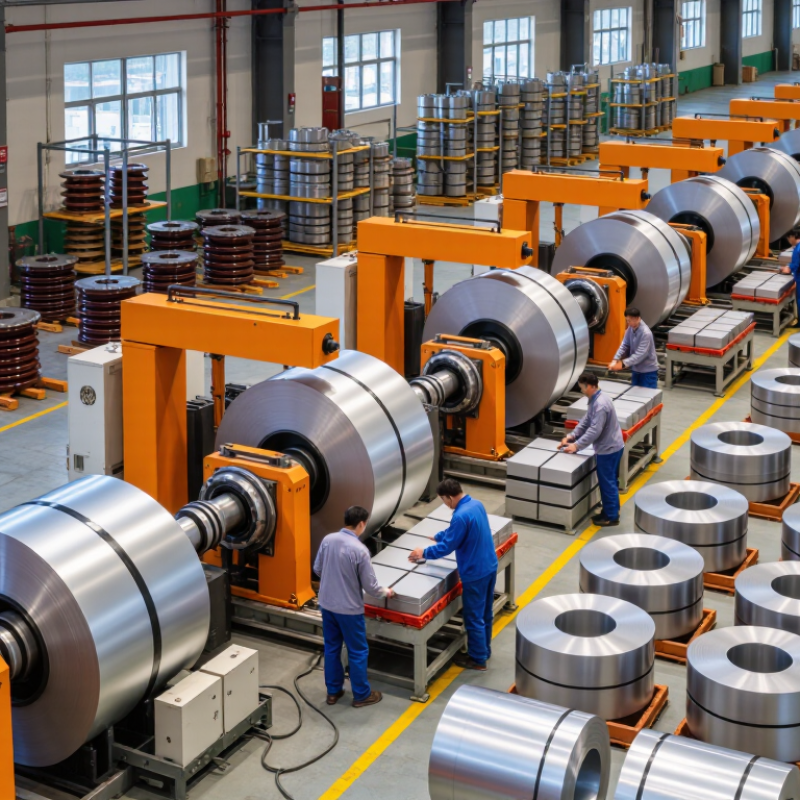
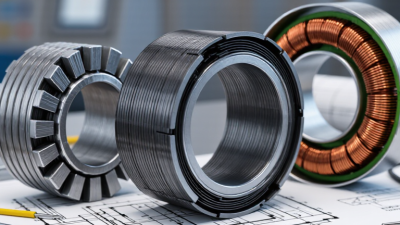
A transformer core is the magnetic path that guides changing flux between windings. Most cores use thin, insulated sheets of electrical steel; some designs use amorphous metal. The laminations restrict circulating currents, while the material and joint design affect energy lost as heat. That loss continues whenever a transformer is energized, even with little load. Small details matter.
The International Energy Agency’s 2023 report, Electricity Grids and Secure Energy Transitions, says annual grid investment needs to exceed $600 billion by 2030, up from about $300 billion. More grid equipment makes core efficiency a practical purchasing issue, not just a laboratory metric. For global buyers comparing Chinese suppliers, request test data for no-load loss, material grade, core dimensions, and acoustic performance under stated conditions. Check that samples and production units follow the same specifications. A low-loss claim alone can mislead; measurement methods and operating conditions matter. Core performance also depends on assembly quality. That part is easy to underestimate.
Transformer cores provide a magnetic path that links the primary and secondary windings. Their material, design, and manufacturing quality affect no-load losses, noise, temperature rise, size, and operating reliability. The comparison below covers common core options and practical points for evaluating suppliers; it does not rank or identify companies.
| Core option | Typical material and construction | Key characteristics | Common applications | What buyers should verify |
|---|---|---|---|---|
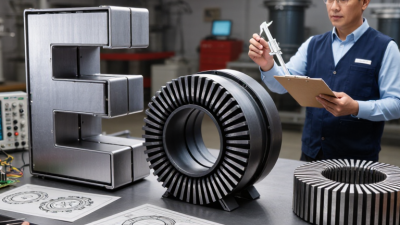
| Grain-oriented electrical steel (GOES) core | Thin, insulated electrical-steel laminations arranged so the rolling direction follows the principal magnetic flux path. Common designs include wound and stacked cores. | Widely used in power-frequency transformers. Grain orientation helps reduce core loss when the flux follows the preferred direction; joints and cutting quality influence performance. | Power and distribution transformers, including many oil-immersed and dry-type designs. | Steel grade and thickness, coating or insulation, burr control, joint design, stacking factor, dimensional tolerances, and measured core-loss data. |
| Amorphous-metal core | Very thin ribbons of amorphous magnetic alloy, commonly assembled as a wound core. | Can achieve lower no-load losses than conventional electrical-steel designs in suitable transformer applications. The material is relatively brittle and its magnetic characteristics and manufacturing requirements differ from GOES. | Energy-efficient distribution transformers where reducing losses during energized, lightly loaded operation is a priority. | Guaranteed no-load loss, handling and packaging controls, core dimensions, noise performance, and compatibility with the transformer’s electrical and mechanical design. |
| Step-lap GOES core | A stacked GOES core with staggered joints across successive lamination layers. | Staggered joints can improve flux distribution at core corners and help reduce losses and audible noise compared with less refined joint arrangements, depending on design and workmanship. | Distribution and power transformers where performance, noise, and repeatable assembly are important. | Joint-step pattern, cutting precision, stacking sequence, clamping method, assembly consistency, and test results for the finished core or transformer. |
| Wound GOES core | Continuous or slit GOES strip wound into a core shape, with the magnetic path following the strip direction. | A continuous magnetic path can avoid some of the joint effects found in assembled stacks. Core geometry and winding tension must be controlled to protect material properties. | Distribution transformers and other designs suited to wound-core manufacturing. | Core dimensions, strip-edge quality, winding and annealing process, mechanical strength, and whether the design matches the intended winding assembly. |
| Ferrite core | Sintered ferrite ceramic, typically supplied as shaped core pieces rather than electrical-steel laminations. | High electrical resistivity makes ferrites useful at higher frequencies, where eddy-current behavior differs from that of laminated steel. Ferrites are generally not a direct substitute for GOES in conventional power-frequency transformers. | Switch-mode power supplies, high-frequency transformers, and related power-electronic equipment. | Ferrite grade, operating frequency, temperature range, core-loss curves, saturation limits, geometry, and mechanical tolerances. |
| Supplier qualification | Assessment of the manufacturer’s materials, processes, quality controls, documentation, and delivery capability. | Core performance depends on more than the material specification; processing, handling, assembly, and verification affect the results achieved in service. | All transformer projects, especially custom designs and international procurement. | Request drawings, material certificates, agreed inspection criteria, traceability, sample measurements, packaging details, lead times, and clearly defined acceptance tests. |
Note: Core loss, dimensions, noise, and other performance figures depend on the complete transformer design and test conditions. Compare supplier data using the same specifications and measurement methods.