inquiry
Leave Your Message

7 Best Current Transformer Cores for Global Buyers

Choosing the right Current Transformer Core begins with more than comparing prices or catalog dimensions. Global buyers must examine accuracy class, burden performance, saturation behavior, insulation compatibility, and long-term mechanical stability. A core may look identical to another product, yet perform differently under heavy fault current or changing ambient temperatures.

Dr. Joseph H. Harlow, a recognized transformer engineering author, has stated, “Transformer performance depends on coordinated magnetic, electrical, and thermal design.” This principle remains useful when evaluating modern current transformer cores. The magnetic path must remain consistent. The winding window must fit the intended conductor. Small gaps, poor annealing, or uneven assembly can create measurable errors.

Details matter.

This guide reviews seven current transformer core options for international purchasing teams. It considers silicon steel, nanocrystalline, and amorphous materials, along with split-core and toroidal designs. Each option serves a different application. Protection systems may need strong saturation resistance. Metering systems usually demand tighter accuracy. Compact monitoring equipment may prioritize installation speed and low residual error.

The comparison is practical, but not absolute. Supplier data can vary. Testing methods can differ. Real operating conditions may expose weaknesses that laboratory figures overlook. Buyers should verify excitation curves, frequency range, temperature ratings, and sample-test results before approving volume orders. That step is sometimes skipped.

It should not be.

A reliable Current Transformer Core supports safer measurement, predictable relay operation, and more consistent energy management across varied grid conditions.
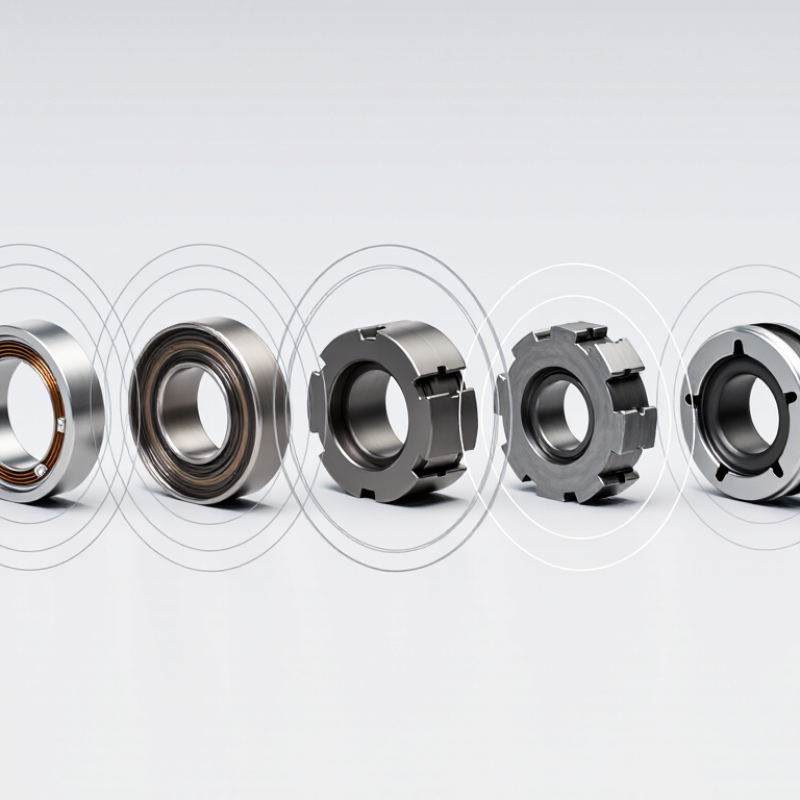
7 Best Current Transformer Cores for Global Buyers

Current Transformer Core Basics and Key Performance Terms

Current transformer core selection begins with purpose, not material. Measurement cores prioritize low ratio error and phase displacement. Protection cores need a high knee-point voltage before saturation. Common options include grain-oriented silicon steel, amorphous metal, nanocrystalline alloys, ferrite, and split-core designs. IEC 61869-2 defines key requirements for instrument transformers, while IEEE C57.13 supports accuracy classification in North American applications.

Important terms require practical testing. Ratio error compares actual transformation with the stated ratio. Phase displacement affects energy metering accuracy. Burden, measured in volt-amperes, includes the relay, meter, and cable load. Excitation current shows how much current magnetizes the core. The knee point matters greatly: beyond it, a small voltage increase can cause a sharp excitation-current rise. IEA Electricity 2024 forecasts global electricity demand to grow by about 3.2% annually through 2026. More measurement points will increase the need for stable cores. That link is clear, but not every market forecast deserves equal trust.

Tips: Specify frequency, primary current, secondary current, burden, accuracy class, and fault level before comparing cores. Ask for excitation curves and temperature data. Check the actual cable window, not only the catalog drawing. Nanocrystalline cores often deliver strong accuracy in compact designs, but cost and mechanical stress can change results. A split core saves installation time. It may sacrifice some accuracy. Field testing remains essential. Calibration errors are easy to underestimate.
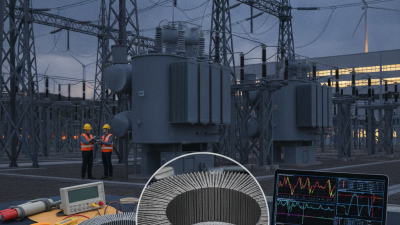
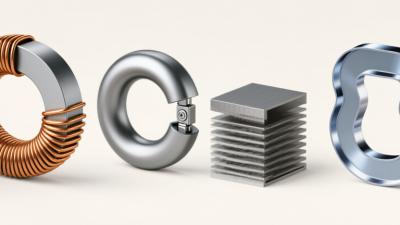
Seven Leading Core Materials for Different Transformer Applications

7 Best Current Transformer Cores for Global Buyers

Seven Leading Core Materials for Different Transformer Applications

Selecting a current transformer core depends on frequency, accuracy, burden, and available space. Seven materials cover many global applications, but no core wins every case. Silicon steel suits 50 or 60 Hz metering and protection, offering stable performance at moderate cost. Ferrite works well at high frequencies, where low losses and compact shapes matter. Its lower saturation flux requires careful primary-current checks. Nanocrystalline cores deliver high permeability and strong accuracy in compact current transformers. They can reduce excitation current, although handling and cost may challenge some projects.

Amorphous metal supports energy-conscious designs with low core loss, especially during repeated operation. Powdered iron tolerates distributed air gaps and supports switching circuits, but its permeability is lower.

Permalloy provides excellent magnetic sensitivity for precision measurement. It is less forgiving of mechanical stress and may require controlled assembly. Sendust offers balanced loss, temperature behavior, and gap stability for power electronics.

Material data alone is insufficient. Engineers should verify saturation, phase error, temperature drift, insulation distance, and waveform behavior. A prototype can reveal weaknesses that a datasheet hides.

Tips: Match the core to the real waveform, not only the nominal current. Test at maximum burden and expected temperature. Keep winding pressure consistent. Small assembly changes can alter accuracy. For fault-current applications, confirm recovery after saturation. Compare two materials before finalizing the design; the familiar choice is not always the best one.

How to Compare Accuracy, Saturation, Losses, and Thermal Stability

7 Best Current Transformer Cores for Global Buyers

Core selection starts with accuracy, not marketing language. Compare the seven candidates under IEC 61869-2 or IEEE C57.13 conditions. Check ratio error, phase displacement, and burden performance at 5%, 20%, and 100% rated current. A core may pass its class at room temperature, then drift beside a warm busbar. That detail matters. The International Energy Agency’s 2023 grid report expects annual grid investment to exceed USD 600 billion by 2030. More monitoring points will demand dependable measurement, not merely low purchase prices.

Saturation testing reveals the practical limit. Review excitation curves, knee-point voltage, remanence, and short-circuit withstand data. Nanocrystalline and high-permeability alloy cores often provide strong accuracy, but manufacturing consistency can vary. Silicon steel may offer simpler sourcing and predictable thermal behavior. Compare no-load loss, magnetic flux density, and temperature rise at the intended frequency. IEC 61869-2 provides a useful reference, yet the test setup may not represent a crowded cabinet. That gap deserves reflection.

Tips: Ask for raw test curves, not only certificates. Test the core at your real burden and ambient temperature. Leave thermal margin above the calculated operating point. Confirm insulation compatibility and mechanical clamping. A small air gap can change performance. Also, do not treat one laboratory result as universal; batch variation remains a practical concern.

Global Buyer Guide to Sizes, Standards, Certifications, and Supply

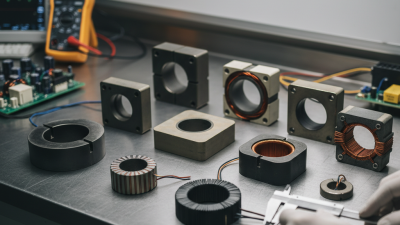
Global buyers should select current transformer cores by application, not appearance. Toroidal, split-core, wound, and bar-primary designs serve different installation conditions. A compact split-core model suits retrofit panels, while a solid toroidal core usually offers better stability and lower installation risk. Check the ratio, burden, accuracy class, frequency, insulation level, and short-time thermal current. A neat datasheet can still mislead.

IEC 61869-1 and IEC 61869-2 define key requirements for instrument transformers. IEEE C57.13 remains widely used in North American projects. Metering often requires classes such as 0.2S or 0.5, while protection applications may need 5P or PX performance. Ask for type-test and routine-test reports from an accredited laboratory. ISO 9001 supports process control, but it does not replace product compliance. Regional declarations, RoHS, REACH, or certification marks may also apply.

Supply planning deserves equal attention. The IEA Electricity 2024 report forecasts global electricity demand to grow by about 3.4% annually from 2024 through 2026. Grid upgrades will increase demand for measurable, traceable components. Confirm drawings, terminal positions, window dimensions, lead lengths, and packaging before ordering. Request serial-level traceability and a documented calibration process. Keep a second qualified source for critical projects. Small dimensional errors can stop installation. That lesson is easy to underestimate. Unexpected saturation, caused by an overlooked burden or fault current, can invalidate an otherwise compliant design.

Selection Checklist for Matching Cores to Real-World Requirements

Choosing among the seven best current transformer cores requires more than comparing material names. Match the core to the real measurement task. Define the primary current range, secondary output, frequency, burden, and required accuracy class. A core for protection may tolerate temporary saturation. A metering core usually cannot. Check both conditions.

Core material matters, but geometry matters just as much. Review the effective cross-sectional area, magnetic path length, window size, and air gap. Small dimensional changes can affect saturation and installation clearance. Confirm operating temperature, insulation level, and mechanical strength. Outdoor equipment may face humidity, vibration, and rapid temperature changes. Indoor panels still need dependable insulation.

Ask for test data, not only catalog values. Request excitation curves, ratio error results, phase displacement data, and temperature limits. Verify whether tests match your frequency and burden. A sample fit test can reveal problems that drawings miss. Measure the winding space and terminal position.

Do not overlook documentation. Reliable suppliers should provide traceable materials, inspection records, and applicable compliance evidence. Regional requirements differ, so confirm them before ordering. In field evaluations, I have found that a seemingly ideal core failed because its window was too narrow. That mistake was avoidable. A checklist helps, although it should be reviewed by an engineer familiar with the final assembly. No checklist replaces judgment.