Leave Your Message
Global buyers need more than a long supplier list when evaluating Transformer Core manufacturers. They need evidence, technical clarity, and consistent delivery performance. A core may look impressive in a catalogue, yet show higher losses during independent testing. Small details matter. Material grade, lamination thickness, stacking factor, insulation quality, and edge finishing can influence transformer efficiency and service life.
William T. McLyman, a respected magnetic-component design authority, observed that magnetic-component design is “both an art and a science.” His view remains relevant today. Manufacturers must combine engineering calculations with practical production experience. Buyers should examine core-loss data, permeability ranges, dimensional tolerances, thermal behavior, and quality-control records. Factory audits, sample inspections, and traceable test reports can reveal more than polished marketing language.
This guide introduces leading Transformer Core manufacturers serving international markets. It considers product capability, manufacturing scale, customization support, certifications, delivery reliability, and communication quality. Regional strengths also matter. Some suppliers excel in grain-oriented electrical steel, while others focus on amorphous materials, nanocrystalline cores, or compact high-frequency designs.
No ranking is flawless. Buyer requirements differ.
A power-grid project may prioritize low losses and large-core consistency. A renewable-energy inverter may require compact geometry and strong thermal performance. Price alone can mislead. A cheaper core may increase operating losses, inspection costs, or replacement risks over time. Therefore, global buyers should compare measurable performance with real production evidence. The strongest manufacturer is not always the largest one. It is the supplier that matches engineering needs with dependable execution.
Top Transformer Core Manufacturers for Global Buyers
Transformer Core Types and Their Role in Power Systems
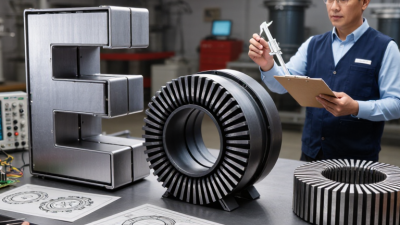
In power systems, a transformer core provides the magnetic path that transfers energy between windings. Its design affects efficiency, heat, noise, and service life. Core-form structures place windings around separate limbs, while shell-form designs surround them with core steel. Three-limb cores suit many three-phase transformers. Five-limb versions can manage zero-sequence flux more effectively. Small units may use toroidal cores for compactness and low leakage.
Grain-oriented electrical steel remains common because its aligned grains reduce magnetizing losses. Amorphous metal cores can cut no-load losses, especially in distribution transformers that stay energized for long periods. However, material choice is not a simple efficiency contest. Joint quality, clamping pressure, burrs, and insulation coatings can change actual performance. I have seen a theoretically excellent core underperform after careless assembly. That detail is easy to miss.
Global buyers should request tested loss data, sound-level results, temperature-rise limits, and traceable material records. Core manufacturers should explain flux density, stacking factor, joint construction, and short-circuit capability. Ask how the core is protected during shipping. A dented corner can create local heating. Factory acceptance tests, dimensional checks, and independent inspection add useful confidence. Yet specifications still need site context: grid frequency, voltage variation, humidity, and expected loading. Not perfect. A practical choice balances lifetime losses, purchase cost, maintenance access, and repair conditions.
| Transformer Core Type | Typical Core Material | Common Manufacturing Form | Primary Role in Power Systems | Typical Applications | Main Advantages | Key Buyer Evaluation Factors |
|---|---|---|---|---|---|---|
| Grain-Oriented Electrical Steel Core | Grain-oriented silicon steel, commonly with approximately 3% silicon | Stacked or step-lap laminations with insulated sheet surfaces | Provides a low-reluctance magnetic path for efficient voltage transformation at utility and industrial frequencies | Distribution transformers Power transformers Grid substations | Low core loss, mature production technology, strong mechanical reliability, and suitability for large ratings | Core-loss performance, magnetic induction, lamination thickness, joint design, dimensional accuracy, and applicable test standards |
| Amorphous Metal Core | Rapidly solidified iron-based amorphous alloy | Wound ribbon core, usually with a carefully controlled rectangular or distributed-gap structure | Reduces no-load losses when a transformer remains energized for long periods | Energy-efficient distribution transformers Commercial buildings Renewable-energy networks | Very low no-load loss and reduced annual energy consumption under suitable operating conditions | Specified no-load loss, winding compatibility, fragile ribbon handling, noise behavior, short-circuit strength, and total lifecycle cost |
| Ferrite Core | Manganese-zinc ferrite or nickel-zinc ferrite ceramic material | Precision-molded E, I, U, pot, or toroidal core sections | Channels high-frequency magnetic flux while limiting eddy-current losses | Switch-mode power supplies High-frequency transformers Power electronics | High electrical resistivity, low high-frequency eddy-current loss, compact size, and broad availability of shapes | Core-loss curve at operating frequency and temperature, saturation flux density, permeability, air-gap tolerance, and dimensional consistency |
| Powdered-Iron Core | Insulated iron powder or iron-alloy powder compacted with a distributed air gap | Molded toroidal, E-shaped, or other pressed-core geometries | Stores magnetic energy and supports controlled inductance in circuits with substantial direct-current bias | DC chokes Input filters Inductors Power converters | Distributed gap, useful DC-bias capability, robust construction, and flexible inductance design | Permeability under DC bias, temperature stability, core loss, mechanical strength, insulation system, and tolerance control |
| Nanocrystalline Core | Nanocrystalline iron-based alloy ribbon with very fine grain structure | Wound toroidal, cut-core, or wound rectangular core | Combines high permeability with low loss for compact magnetic components and accurate current measurement | Current transformers Common-mode chokes Power-quality equipment High-frequency transformers | High permeability, strong attenuation of common-mode noise, low loss over selected frequency ranges, and compact design potential | Frequency-dependent loss, saturation behavior, thermal treatment, winding window, insulation requirements, and core cutting quality |
| Ferrite Planar Core | High-frequency manganese-zinc ferrite | Low-profile E, ER, or similar mating core halves designed for planar windings | Transfers energy efficiently in low-profile, high-frequency power-conversion systems | Telecommunication power supplies Data-center converters Automotive electronics | Low profile, short magnetic path, repeatable assembly, and compatibility with printed-circuit-board windings | Core-loss data at switching frequency, mating-surface flatness, thermal path, insulation distance, creepage, and clamping method |
| Cut Core | Grain-oriented electrical steel, nanocrystalline alloy, or other magnetic ribbon material | Wound core cut into matched sections and reassembled around preformed windings | Creates a closed magnetic circuit while simplifying winding insertion and maintenance-oriented assembly | Power transformers Voltage transformers Specialty inductors | Convenient winding installation, good magnetic utilization, and suitability for selected repair or retrofit designs | Cut-surface quality, joint air gap, clamping pressure, burr control, magnetic loss after cutting, and assembly repeatability |
| Toroidal Core | Electrical steel, amorphous metal, nanocrystalline alloy, ferrite, or powdered material | Continuous or segmented ring-shaped winding | Provides a compact closed magnetic path with low external leakage flux | Instrument transformers Audio transformers Power supplies EMI filters | High magnetic utilization, compact geometry, low leakage field, and potentially low audible hum when properly designed | Winding automation, insulation clearance, thermal dissipation, mechanical mounting, inrush current, and core material selection |
| Three-Leg Laminated Core | Grain-oriented electrical steel | Interleaved or step-lap laminations assembled into a three-limb magnetic circuit | Supports three-phase voltage transformation with balanced magnetic flux distribution | Three-phase distribution transformers Industrial transformers Substation equipment | Efficient use of active material, compact three-phase construction, and well-established insulation and winding practices | Phase balance, limb flux density, joint design, sound level, short-circuit withstand, cooling arrangement, and transport dimensions |
| Five-Leg Laminated Core | Grain-oriented electrical steel | Five-limb laminated construction with additional return paths for flux | Provides auxiliary magnetic return paths that can accommodate zero-sequence flux in selected three-phase transformer designs | Large power transformers Grounded-neutral systems Special substation applications | Improved accommodation of certain unbalanced and zero-sequence flux conditions compared with a basic three-leg arrangement | Zero-sequence impedance, thermal behavior, structural rigidity, transportation limits, fault-current requirements, and system grounding conditions |